Prickly Pear

Pomegranate
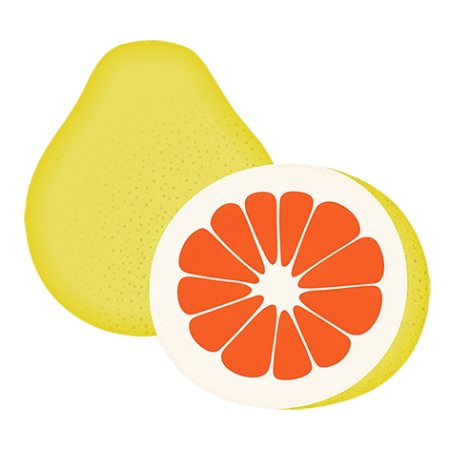
Pomelo
A large citrus fruit with a thick rind and juicy, mildly sweet red or yellow segments. It’s a great source of Vitamin C and fiber.
230
1 medium fruit
(610 grams)
CAL
A
Nutri-Score
Low in calories and rich in vitamins and antioxidants.
Value per 100 grams & per cup (190g):
40 kcal / 70 kcal
Protein
0.8 grams / 1.5 grams
Fats
0.1 grams / 0.2 grams
Carbohydrates
9.5 grams / 18 grams
Fiber
1.5 grams / 2.5 grams
Vitamins & Nutrients
- Vitamin C: Strong antioxidant that boosts immunity and skin health.
- Vitamin A: Supports healthy vision and skin.
- Potassium: Helps maintain proper heart and muscle function.
- Magnesium: Important for nerve function and bone health.
Satiety and Feelings
Pomelo is hydrating, refreshing, and slightly tangy, with a crisp, juicy texture. Its mild sweetness makes it a perfect snack or addition to salads.
What does 100 g look like?
About 1/2 of a medium-sized pomelo or about 1/2 cup of pomelo pulp.
What does 2000/2500 calories look like?
About 40 apples (4 kg)
Daily Value per 100 grams %
Did you know?
- Historical Significance: Pomelo is thought to be the ancestor of all modern citrus fruits, including oranges and grapefruits.
- Origin: Native to Southeast Asia, pomelo has been cultivated for over 2,000 years. It is often referred to as the “king of citrus” due to its size, which can be up to five times the size of a grapefruit.
- Cultural Symbolism: In Chinese culture, pomelo is considered a symbol of abundance, good luck, and family unity, often featured in celebrations like the Lunar New Year.
Drawback ⚠️
Acidity: While milder than some citrus fruits, pomelo can still cause discomfort for individuals with sensitive stomachs or acid reflux.
Size: Pomelos are large fruits, making them harder to store and handle compared to smaller citrus fruits.
Hard to Peel: The thick rind can make peeling pomelo more time-consuming compared to other citrus fruits.