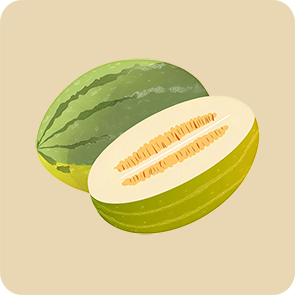
Watermelon

Orange
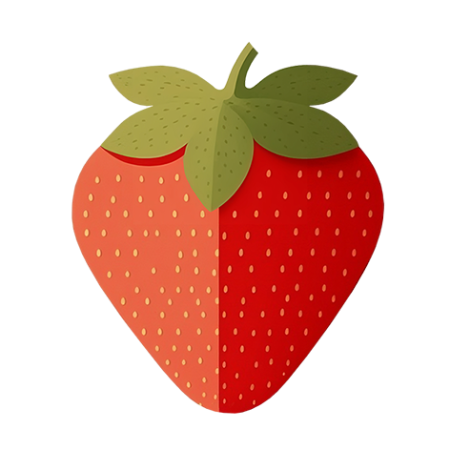
Strawberry
A vibrant, juicy, and naturally sweet—perfect fresh or in dishes. Packed with vitamin C and antioxidants!
40
10 berries
(120 grams)
CAL
A
Nutri-Score
Very low in calories, rich in antioxidants, and high in vitamin C
Value per 100 grams & per cup (150g):
30 kcal / 45 kcal
Protein
0.8 grams / 1.2 grams
Fats
0.3 grams / 0.45 grams
Carbohydrates
7.7 grams / 11.5 grams
Fiber
2 grams / 3 grams
Vitamins & Nutrients
- Vitamin C: Helps boost immunity, reduce inflammation, and protect against oxidative stress.
- Manganese: Supports bone health, metabolism, and the formation of connective tissue.
- Vitamin A: Supports healthy skin and vision.
- B Vitamins (B6, B1, B2): Help with energy production and nerve function.
Satiety and Feelings
Strawberries are light and refreshing with a juicy, sweet-tart bite. They feel satisfying in the moment, but only provide mild and short-lived fullness.
What does 100 g look like?
10 medium strawberries or 1 cup.
How many to eat to reach 2000/2500 calories?
About 600 strawberries.
Daily Value per 100 grams %
Did you know?
Strawberries aren’t true berries — botanically, they’re “aggregate fruits” since their seeds are on the outside.
They were once used medicinally — ancient Romans used strawberries to treat everything from depression to fever.
Strawberries originated in Europe – but the modern garden strawberry (Fragaria × ananassa) was first cultivated in 18th-century France by crossing two wild species: one from North America and one from Chile.
- They were once a luxury – in the 16th and 17th centuries, strawberries were served only at royal banquets and aristocratic tables.
Drawback ⚠️
Highly perishable – they spoil quickly, even in the fridge.
Often sprayed with pesticides – strawberries frequently top the “Dirty Dozen” list.
Can cause allergies – especially in people sensitive to birch pollen.