Sapodilla

Feijoa

Longan
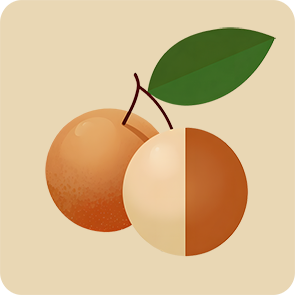
Longan is a small, round fruit with translucent, juicy flesh and a hard brown seed. It has a sweet, slightly musky flavor and is often eaten fresh, dried, or in desserts and drinks.
20
10 berries
(80 grams)
CAL
A
Nutri-Score
Contains vitamins, minerals, and natural sugars, making it a light, nutrient-rich tropical fruit.
Value per 100 grams & per cup (150g):
60 kcal | 90 kcal
Protein
1.5 grams | 2 grams
Fats
0.1 grams | 0.15 grams
Carbohydrates
15 grams | 22.5 grams
Fiber
1 gram | 1.5 grams
Vitamins & Nutrients
- Vitamin C: Supports immune function and skin health.
- Vitamin B6: Supports metabolism and brain function.
- Potassium: Promotes fluid balance and muscle function.
- Magnesium: Supports muscle and nerve function.
Satiety and Feelings
Longan is light and sweet, providing a quick energy boost but low in fiber and protein, so it’s not very filling.
What does 100 g look like?
About a handful of longans, roughly 12–15 small fruits.
What does 2000/2500 calories look like?
About 440 berries.
Daily Value per 100 grams %
Did you know?
Longan is native to Southeast Asia and is sometimes called the “dragon’s eye” because of its translucent flesh surrounding a dark seed.
The fruit is highly perishable and is often eaten fresh or dried for longer storage.
Its sweet, juicy flavor makes it popular in desserts, drinks, and traditional Chinese medicine.
Longans are often cultivated commercially for their consistent size, sweetness, and ease of peeling compared to native fruits.
Drawback ⚠️
Low in fiber and protein, so it may not be very filling.
High in natural sugars, which may not suit low-sugar diets.
Soft flesh is perishable, requiring quick consumption or refrigeration.