Sheep Milk
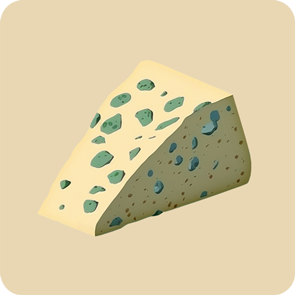
Roquefort

Ricotta
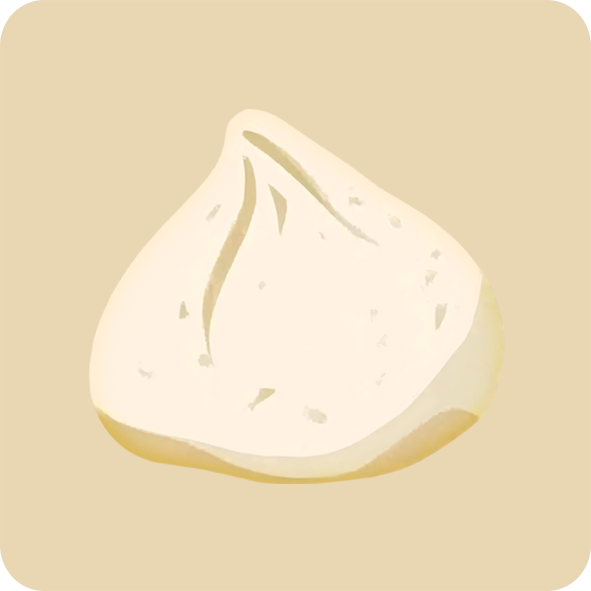
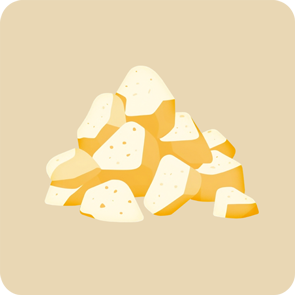
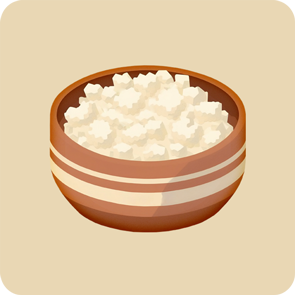
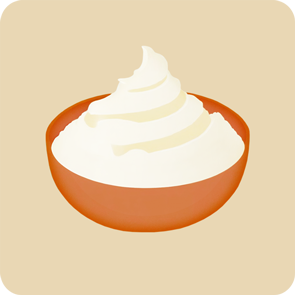
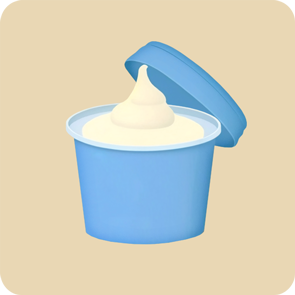
A soft, fresh Italian cheese made from the whey leftover from other cheeses. It has a light, creamy texture and a mildly sweet flavor. Commonly used in dishes like lasagna, desserts, and spreads.
175
1 cone
(100 grams)
CAL
C
Nutri-Score
Contains calcium and protein but also high in sodium and saturated fats.
Value per 100 grams & per cup (250g):
175 kcal | 435 kcal
Protein
10 grams | 28 grams
Fats
13 grams | 33 grams
Carbohydrates
3 grams | 8 grams
Fiber
None
Vitamins & Nutrients
- Calcium: Supports bone strength and teeth.
- Vitamin A: Promotes healthy vision and immune function.
- Riboflavin (Vitamin B2): Helps convert food into energy.
- Phosphorus: Important for bones and teeth.
Satiety and Feelings
Ricotta’s light and creamy texture offers comfort and mild satisfaction but is less filling than harder cheeses due to lower fat and protein per volume.
What does 1 slice look like?
Roughly a heaping tablespoon or the size of a golf ball (roughly 1/5th of the cone).
What does 100 g look like?
About 3.5 fluid ounces or just under ½ cup.
What does 2000 | 2500 calories look like?
Approximately 11 ½ cups or 2.9 kilograms (6.4 lbs.)
Daily Value per 100 grams %
Did you know?
Ricotta means “recooked” in Italian, referring to the process of making cheese from reheated whey.
It is traditionally made from sheep, cow, or goat whey.
Ricotta was historically a byproduct of cheese-making but became a prized ingredient on its own.
It’s a key ingredient in classic Italian dishes like cannoli and lasagna.
Drawbacks ⚠️
Contains lactose, so it may not be suitable for those with lactose intolerance.
Lower in protein compared to aged cheeses, so less filling.
Some commercial ricotta can be high in sodium.