Evaporated Milk

Emmental

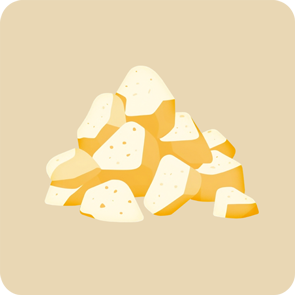
Feta
A staple in Greek cuisine, feta is a brined white cheese with a crumbly texture and salty-tangy flavor. It's often used in salads, pastries, or grilled dishes and adds a sharp, savory contrast to fresh ingredients.
75
1 slice
(30 grams)
CAL
D
Nutri-Score
Rich in calcium and protein, but also high in sodium.
Value per 100 grams & per cup (150g):
265 kcal | 395 kcal
Protein
14 grams | 21 grams
Fats
21 grams | 32 grams
Carbohydrates
4 grams | 6 grams
Fiber
None
Vitamins & Nutrients
- Calcium: Supports strong bones and teeth.
- Phosphorus: Helps the body use calcium effectively.
- Vitamin B12: Needed for red blood cell formation.
- Riboflavin (B2): Helps convert food into energy.
Satiety and Feelings
Feta’s high fat and protein content makes it satisfying in small amounts, but its crumbly texture and saltiness make it better as an accent cheese rather than a main protein source.
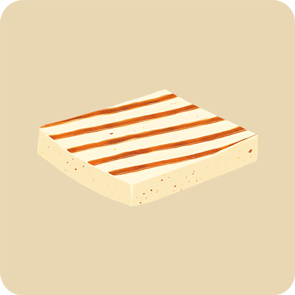
What does 1 slice look like?
About the size of a playing card — approximately 5 cm (2 inches) wide, 8.5 cm (3.3 inches) long, and 6 mm (¼ inch) thick.
What does 100 g look like?
Roughly ⅔ cup crumbled or 4 slices.
What does 2000 | 2500 calories look like?
About 6 ⅔ cups crumbled or 27 slices (670 grams / 1.48 lbs.)
Daily Value per 100 grams %
Did you know?
Feta has been made in Greece for over 2,000 years and is one of the oldest cheeses in the world.
The name “feta” comes from the Italian word for “slice”, referring to how it’s traditionally stored and served.
True Greek feta is PDO protected, meaning it must be made in specific regions of Greece using sheep or goat milk.
Feta is typically aged in brine, giving it its signature salty flavor and extended shelf life.
Drawbacks ⚠️
Very high in sodium due to the brine — may not be ideal for those on low-salt diets.
Contains saturated fat, which should be moderated for heart health.
Its strong flavor can overpower dishes if not balanced with other ingredients.