Cream Cheese
Feta
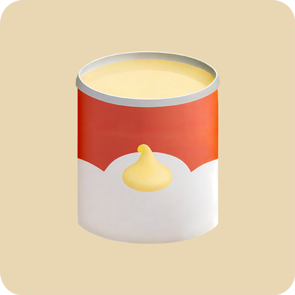
Evaporated Milk
With a slightly caramelized flavor, evaporated milk is commonly used in baking, cooking, and beverages to add richness without the high fat content of cream.
20
1 tbsp
(15 ml)
CAL
D
Nutri-Score
Moderate in fat, contains calcium and vitamin B12.
Value per 100 ml & per cup (240ml)
135 kcal | 320 kcal
Protein
7 grams | 17 grams
Fats
7.5 grams | 18 grams
Carbohydrates
10 grams | 25 grams
Fiber
None
Vitamins & Nutrients
- Calcium: Supports bone strength and teeth health.
- Vitamin D: Aids calcium absorption and immune function.
- Vitamin B12: Important for nerve function and energy.
- Riboflavin (Vitamin B2): Supports energy metabolism.
Satiety and Feelings
Evaporated milk provides a creamy texture and moderate protein, making it satisfying, but it has lower fat than cream, so fullness may not last as long.
What does 100 ml look like?
Just under half a cup or about 6.7 tablespoons.
What does 2000 | 2500 calories look like?
About 15 cups (3.6 liters / 7.9 lbs) of evaporated milk.
Daily Value per 100 milliliters %
Did you know?
Evaporated milk is made by removing 60% of the water from fresh milk, concentrating its nutrients.
It has a slightly caramelized flavor due to the heating process.
Commonly used in desserts, soups, and sauces to add creaminess without heavy fat.
Has a long shelf life when unopened, making it a pantry staple.
Drawbacks ⚠️
Contains added sodium and sometimes stabilizers in commercial varieties.
Lower in fat than cream, so it might be less satisfying for those needing high energy density.
Not suitable for people with lactose intolerance or milk allergies.