Camembert

Cheese Spread

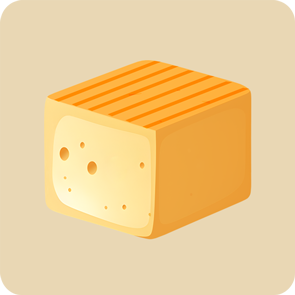
Chedder
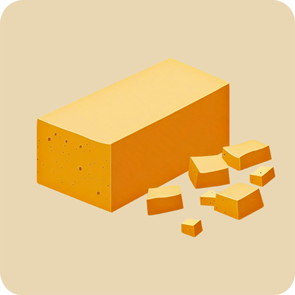
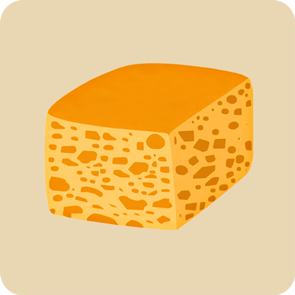
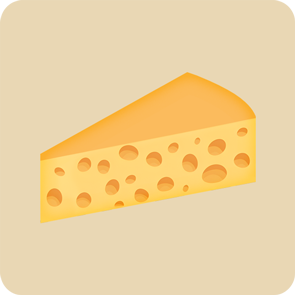
Cheddar has a sharp, nutty flavor that intensifies with aging. It’s widely used in sandwiches, cooking, and snacking.
115
1 slice
(30 grams)
CAL
D
Nutri-Score
Rich in protein, calcium, and vitamin B12, but it also contains saturated fats and sodium.
Value per 100 grams & per cup (130g):
405 kcal | 530 kcal
Protein
25 grams | 33 grams
Fats
33 grams | 44 grams
Carbohydrates
1.3 grams | 1.7 grams
Fiber
None
Vitamins & Nutrients
- Calcium: Supports strong bones and teeth.
- Vitamin B12: Important for brain and nerve health.
- Phosphorus: Assists in energy production and bone maintenance.
- Zinc: Supports immune function.
Satiety and Feelings
Cheddar’s rich fat and protein content provides satisfying fullness, but its low fiber means pairing with fiber-rich foods is best for lasting satiety.
What does 1 slice look like?
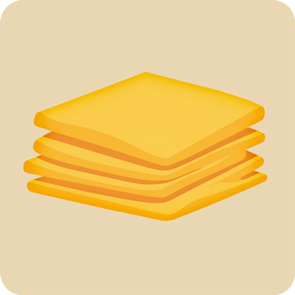
About the size of a playing card, roughly 5 cm (2 inches) wide, 5 cm (2 inches) long, and 3–4 mm (1/8 inch) thick.
What does 100 g look like?
About 3.5 slices or roughly 1 cup shredded.
What does 2000 | 2500 calories look like?
About 5–6 cups shredded (264–330 grams / 0.58–0.73 lbs).
Daily Value per 100 grams %
Did you know?
Cheddar originated in the English village of Cheddar, Somerset in the 12th century.
It’s one of the most widely consumed cheeses globally.
Aging time affects flavor: mild Cheddar is aged a few months, sharp Cheddar up to several years.
Cheddar is often colored orange with annatto, a natural plant extract.
Drawbacks ⚠️
High in saturated fat and sodium, which can affect heart health if overconsumed.
Low in fiber; best eaten with fiber-rich foods.
Some aged Cheddars may contain trace lactose, which can affect lactose-intolerant individuals.