Brie Cheese

Butter
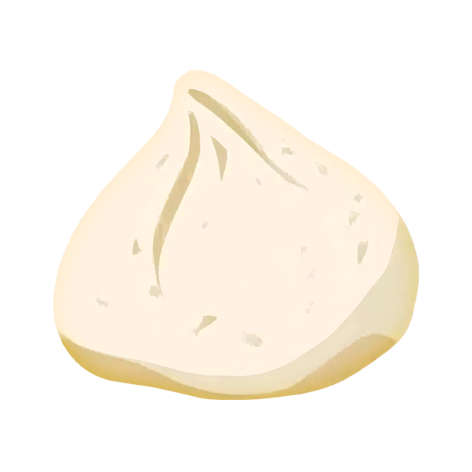
Burrata
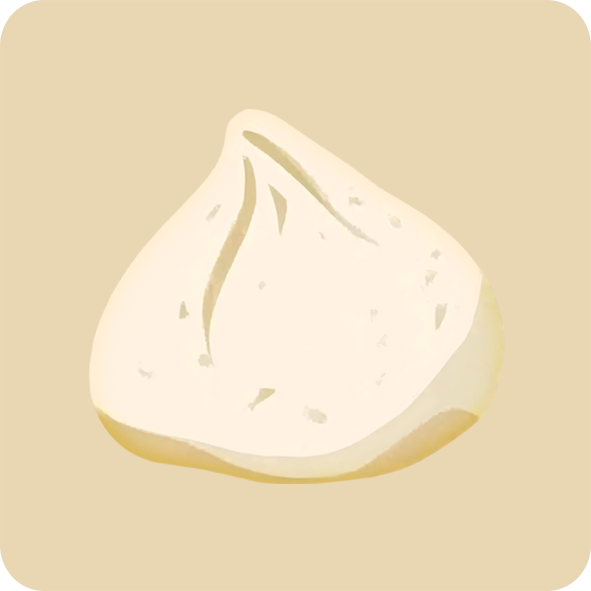
A luxurious Italian cheese made from mozzarella and cream, Burrata has a soft outer shell and a rich, creamy interior. It’s prized for its decadent texture and is often served fresh with salads, tomatoes, or crusty bread.
350
1 ball
(125 grams)
CAL
D
Nutri-Score
Contains calcium and protein, but also high in saturated fat and low in fiber.
Value per 100 grams & per cup (150g):
300 kcal | 450 kcal
Protein
12 grams | 18 grams
Fats
27 grams | 40 grams
Carbohydrates
2 grams | 3 grams
Fiber
None
Vitamins & Nutrients
- Calcium: Builds strong bones and teeth.
- Vitamin A: Supports vision and immune function.
- Phosphorus: Important for bone health and energy metabolism.
- Vitamin B12: Helps maintain nerve and blood cell health.
Satiety and Feelings
Burrata is rich, creamy, and indulgent, offering immediate satisfaction thanks to its fat content. However, its low fiber and low protein levels mean it's not very filling long-term.
What does 100 g look like?
Roughly 3 medium Burrata balls or about ⅔ cup of torn Burrata.
What does 2000 | 2500 calories look like?
About 6¾–8⅓ cups (670–835 grams / 1.48–1.84 lbs) of Burrata.
Daily Value per 100 grams %
Did you know?
Burrata was invented in the Apulia region of Italy in the early 1900s.
The outer layer is made of mozzarella, while the inside is filled with stracciatella and cream.
It’s best served fresh, often at room temperature, to enjoy the full flavor and texture.
The name “Burrata” comes from the Italian word “burro”, meaning butter, a nod to its rich, buttery center.
Drawbacks ⚠️
High in saturated fat, which may affect heart health if consumed in excess.
Low in fiber and carbohydrates, so it doesn’t provide long-lasting energy.
Like many fresh cheeses, it has a short shelf life and must be kept refrigerated.