Greek Yogurt

Kefir Milk
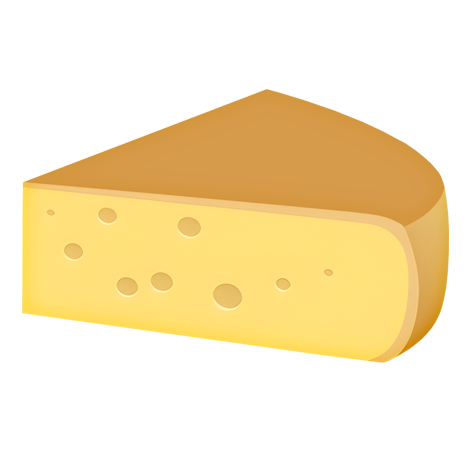
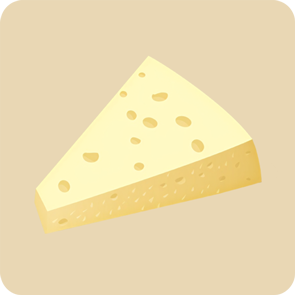
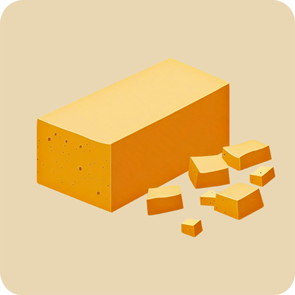
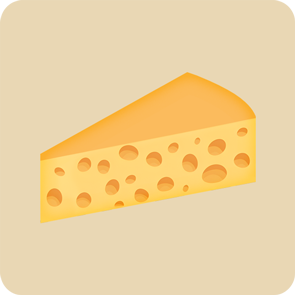
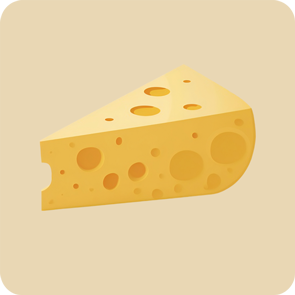
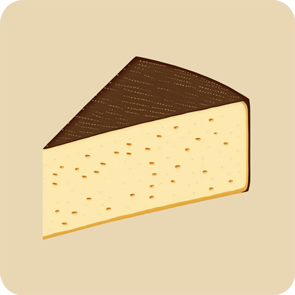
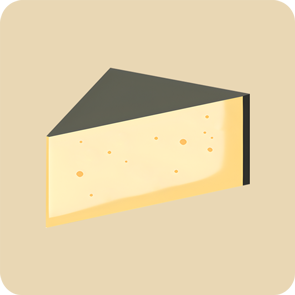
Gruyère
A hard, yellow Swiss cheese known for its complex, nutty, and slightly sweet flavor, Gruyère melts beautifully, making it a favorite for fondue, gratins, and sandwiches.
120
1 slice
(30 grams)
CAL
D
Nutri-Score
Contains calcium and protein but also high in sodium and saturated fats.
Value per 100 grams & per cup (130g):
415 kcal | 535 kcal
Protein
30 grams | 39 grams
Fats
32 grams | 42 grams
Carbohydrates
None
Fiber
None
Vitamins & Nutrients
- Calcium: Supports strong bones and teeth.
- Vitamin A: Helps maintain good vision and skin health.
- Phosphorus: Works alongside calcium for bone strength.
- Vitamin B12: Important for energy and nerve function.
Satiety and Feelings
Gruyère is rich and filling due to its high fat and protein content, offering long-lasting satiety. Its savory, nutty flavor also makes it a satisfying snack or meal addition.
What does 1 slice look like?
About the size of a credit card, roughly 7 cm (2.75 inches) long, 4 cm (1.5 inches) wide, and 3 mm (1/8 inch) thick.
What does 100 g look like?
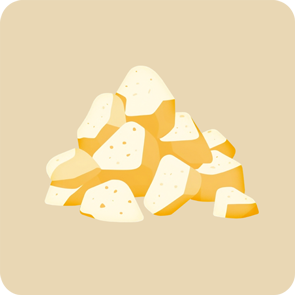
About ¾ cup shredded or 3 to 4 slices.
What does 2000 | 2500 calories look like?
About 6 ¾ cups shredded or 30 slices (670 grams / 1.48 lbs.)
Daily Value per 100 grams %
Did you know?
Gruyère is named after the town of Gruyères in Switzerland, where it has been made since the 12th century.
It is a protected designation of origin (PDO) cheese, meaning only cheese made in specific Swiss regions can be called Gruyère.
Gruyère is famous for its role in traditional Swiss fondue.
Its name is believed to come from the French word “gruère,” meaning “grainy,” referring to the cheese’s slightly grainy texture.
Drawbacks ⚠️
Contains saturated fats, which may impact heart health if eaten in excess.
Contains sodium, which may affect blood pressure in salt-sensitive individuals.
Being a dairy product, it’s unsuitable for those with lactose intolerance or dairy allergies.