Buttermilk
Chedder

Camembert
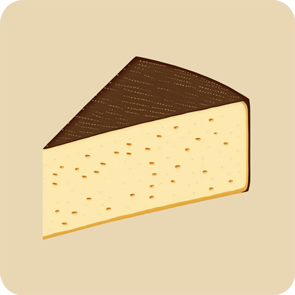
A soft, creamy French cheese with a white, edible rind, Camembert has a mild, earthy flavor that becomes more intense as it ripens. It’s often served at room temperature with bread or fruit.
95
1 wedge
(30 grams)
CAL
D
Nutri-Score
Rich in calcium, protein, and vitamin B12, but also contains saturated fats and moderate sodium.
Value per 100 grams & per cup (120g):
300 kcal | 360 kcal
Protein
8 grams | 10 grams
Fats
24 grams | 29 grams
Carbohydrates
0.5 grams | 0.6 grams
Fiber
None
Vitamins & Nutrients
- Calcium: Supports bone and teeth health.
- Vitamin B12: Important for nervous system function.
- Phosphorus: Aids energy metabolism and bone health.
- Vitamin A: Helps maintain vision and immunity.
Satiety and Feelings
Camembert is rich and creamy, making it satisfying in small portions. Like other soft cheeses, its high fat but low fiber content means it may not keep you full for long without pairing with fiber-rich foods.
What does 1 wedge look like?
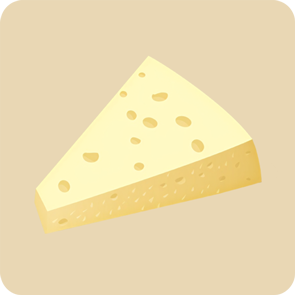
About one-eighth of a whole Camembert wheel, roughly 7 cm (2.75 inches) wide at the rind, tapering to a point, and about 3 cm (1.2 inches) thick.
What does 100 g look like?
About 3 medium wedges or roughly ¾ cup sliced Camembert.
What does 2000 | 2500 calories look like?
About 6–7½ cups wedges (600–750 grams / 1.32–1.65 lbs).
Daily Value per 100 grams %
Did you know?
Camembert originated in Normandy, France in the late 18th century.
The white rind is formed by Penicillium candidum and is fully edible.
Camembert ripens from the outside in, becoming softer and stronger in flavor over time.
It’s traditionally paired with apple cider or French bread.
Drawbacks ⚠️
Contains saturated fats which may affect heart health if consumed excessively.
Low fiber content; best served with fruits or whole grains.
Like Brie, unpasteurized Camembert may pose a risk to pregnant people.