Burrata
Buttermilk

Butter
A creamy dairy product made by churning cream, butter is used widely in cooking, baking, and as a spread due to its rich flavor and texture.
100
1 tbsp
(15 grams)
CAL
D
Nutri-Score
Rich in saturated fats.
Value per 100 grams & per cup (125g):
715 kcal | 1625 kcal
Protein
1 gram | 2 grams
Fats
81 grams | 184 grams
Carbohydrates
1 gram | 1 gram
Fiber
None
Vitamins & Nutrients
- Vitamin A: Essential for vision and immune function.
- Vitamin D: Supports calcium absorption and bone health.
- Vitamin E: Acts as an antioxidant protecting cells.
- Vitamin K: Important for blood clotting and bone metabolism.
Satiety and Feelings
Butter is calorie-dense and rich, providing a quick energy source but low in protein and fiber, so it won’t keep you full for long.
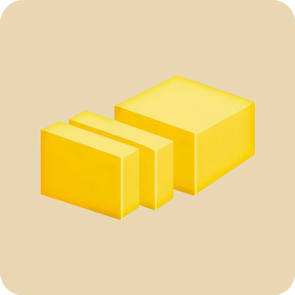
What does 100 g look like?
About 7 tablespoons or roughly ¾ of a stick of butter.
What does 2000 | 2500 calories look like?
About 2 ¾ sticks or 280 grams (0.62 lbs) of butter.
Daily Value per 100 grams %
Did you know?
Butter is made by churning cream, separating fat from buttermilk.
- Butter is about 80% fat and 20% water, which is why it behaves differently when melted compared to oils.
- Salted butter was originally created to help preserve it before refrigeration became common.
Butter’s distinct flavor varies based on the animal’s diet and production methods.
- The word “butter” comes from the Greek word “boutyron”, meaning cow cheese.
Drawbacks ⚠️
High in saturated fats, which can impact heart health if eaten excessively.
Very calorie-dense, so small portions add up quickly.
Contains cholesterol, which may affect cardiovascular health in some people.