Roquefort
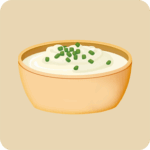
Sour Cream

Provolone
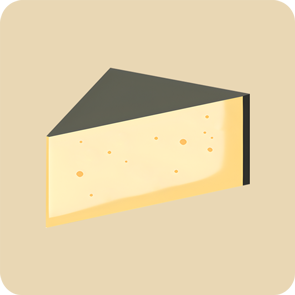
A smooth, slightly tangy cheese, Provolone is aged to develop flavor ranging from mild and creamy to sharp and piquant. Often used in sandwiches, it melts well and browns beautifully under heat.
100
1 slice
(30 grams)
CAL
D
Nutri-Score
Contains calcium and protein but also high in sodium and saturated fats.
Value per 100 grams & per cup (130g):
350 kcal | 465 kcal
Protein
28 grams | 37 grams
Fats
27 grams | 36 grams
Carbohydrates
2 grams | 3 grams
Fiber
None
Vitamins & Nutrients
- Calcium: Supports bone health.
- Vitamin A: Important for vision and immune system.
- Phosphorus: Works with calcium for healthy bones.
- Vitamin B12: Supports nerve function and red blood cells.
Satiety and Feelings
Provolone is rich and dense, providing a satisfying feeling of fullness thanks to its high fat and protein content.
What does 1 slice look like?
About the size of a playing card — roughly 5 cm (2 inches) wide, 8.5 cm (3.3 inches) long, and 6 mm (¼ inch) thick.
What does 100 g look like?
About 3–4 slices or ¾ cup shredded.
What does 2000 | 2500 calories look like?
About 6 ¼ cups shredded or 22 slices (600 grams / 1.32 lbs.)
Daily Value per 100 grams %
Did you know?
Provolone originated in Southern Italy but is now commonly made in Northern regions like Lombardy.
The name comes from “provola,” a smaller version of the cheese.
There are two types: Provolone Dolce (mild, aged 2–3 months) and Provolone Piccante (sharp, aged over 4 months).
It’s often shaped like a sausage or ball and hung with ropes to age traditionally.
Drawbacks ⚠️
High in saturated fats, which can affect cholesterol levels.
Salty, which can raise blood pressure if consumed excessively.
Not suitable for those avoiding aged or processed dairy due to histamines or additives.