Munster
Sheep Milk

Parmesan
Parmesan is a hard, aged Italian cheese known for its nutty, savory flavor and granular texture. It’s commonly grated over pasta, salads, and soups.
20
1 tbsp, grated
(5 grams)
CAL
D
Nutri-Score
Rich in protein and calcium, also sodium and saturated fat.
Value per 100 grams & per cup (100g):
430 kcal
Protein
40 grams
Fats
30 grams
Carbohydrates
5 grams
Fiber
None
Vitamins & Nutrients
- Calcium: Vital for strong bones and teeth.
- Vitamin A: Supports vision and immune health.
- Phosphorus: Works with calcium for bone health.
- Zinc: Important for immune function and wound healing.
Satiety and Feelings
Parmesan’s rich umami flavor and high protein content make it satisfying in small amounts. Its hard texture slows eating, helping with mindful consumption.
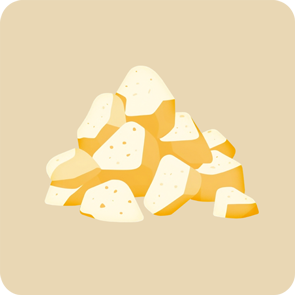
What does 1 tablespoon grated look like?
About the size of a large spoonful, roughly 5 grams.
What does 100 g look like?
About 1 ¼ cups grated Parmesan.
What does 2000 | 2500 calories look like?
Approximately 10 cups grated or 800 grams (1.76 lbs.)
Daily Value per 100 grams %
Did you know?
Parmesan is officially called Parmigiano-Reggiano and must be made in specific regions of Italy to earn the name.
The cheese is aged for at least 12 months, sometimes up to 36 months or more, giving it its distinct flavor and texture.
Parmesan is one of the most grated cheeses worldwide, favored for its umami punch.
It was historically used as a way to preserve milk nutrients before refrigeration.
Drawbacks ⚠️
Parmesan is high in sodium, which can affect blood pressure if consumed in excess.
Contains saturated fat, which may impact heart health when overeaten.
The hard texture may be difficult for some people to digest or chew.