Babybel
Brie Cheese
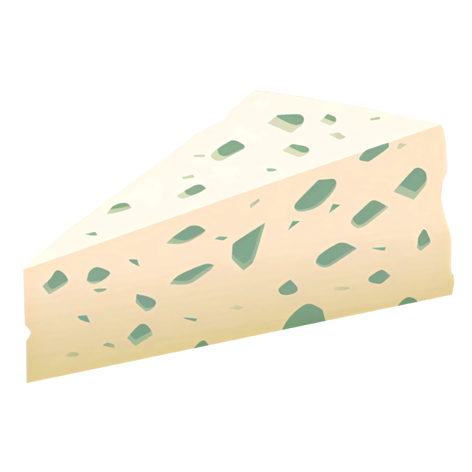
Blue Cheese
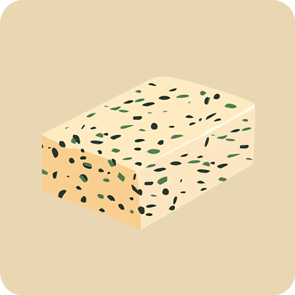
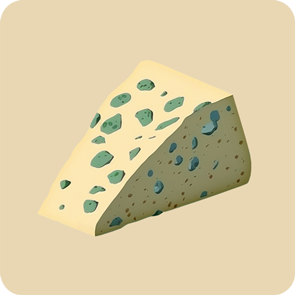
Aged and veined with blue-green mold, blue cheese has a sharp, tangy, and often salty flavor. It’s commonly used in salads, dressings, and gourmet burgers.
100
1 slice
(30 grams)
CAL
D
Nutri-Score
Rich in calcium, protein, and vitamin B12, but it’s also high in saturated fat and sodium.
Value per 100 grams & per cup (100g):
350 kcal | 475 kcal
Protein
21 grams | 28 grams
Fats
30 grams | 40 grams
Carbohydrates
2 grams | 2.7 grams
Fiber
None
Vitamins & Nutrients
- Calcium: Builds strong bones and supports nerve function.
- Vitamin B12: Essential for red blood cell and brain health.
- Phosphorus: Helps maintain energy and bone strength.
- Zinc: Supports immune function and wound healing.
Satiety and Feelings
Blue cheese is dense and satisfying due to its fat and protein content. Its strong flavor means you may eat less to feel satisfied, though its lack of fiber means it won’t offer prolonged fullness on its own.
What does 1 slice look like?
About the size of a playing card, roughly 5 cm (2 inches) wide, 5 cm (2 inches) long, and 3–4 mm (1/8 inch) thick.
What does 100 g look like?
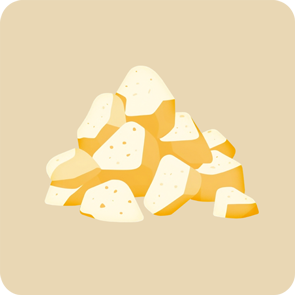
Roughly 4–5 slices or just over ¾ cup crumbled.
What does 2000 | 2500 calories look like?
About 5¾ to 7¼ cups crumbled (570–715 grams / 1.26–1.58 lbs).
Daily Value per 100 grams %
Did you know?
Blue cheese is aged using Penicillium mold, which gives it its distinct flavor and appearance.
It has been made for centuries—Roquefort, one of the oldest varieties, is said to date back to Roman times.
The strong smell comes from butyric acid produced during fermentation.
Some people have a genetic sensitivity to the smell and taste of blue cheese.
Drawbacks ⚠️
High in sodium, which may impact blood pressure.
High in saturated fat, which could affect heart health if overconsumed.
The bold flavor isn’t for everyone and may overpower milder dishes.
Can pose a risk during pregnancy if made from unpasteurized milk.