Grapeseed Oil

Lovage
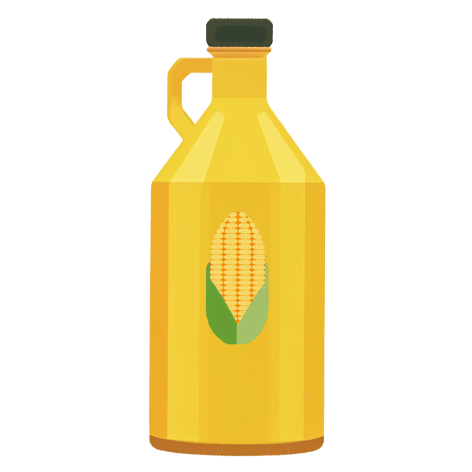
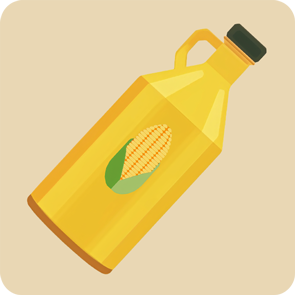
Corn Oil
Corn oil is extracted from the germ of corn kernels. It has a light flavor, a high smoke point, and is commonly used for frying, sautéing, baking, and salad dressings.
120
1 tbsp
(15 ml)
CAL
C
Nutri-Score
Contains healthy fats and Vitamin E, but is very high in calories and contains no protein or carbohydrates.
Value per 100 ml & per cup (240ml):
805 kcal | 1925 kcal
Protein
None
Fats
90 grams | 218 grams
Carbohydrates
None
Fiber
None
Vitamins & Nutrients
- Vitamin E: Protects cells from oxidative damage.
- Vitamin K: Supports blood clotting and bone health.
- Omega-6 Fatty Acids: Important for skin health and metabolism.
Satiety and Feelings
Corn oil is highly calorie-dense, providing energy but no fiber or protein, so it does not contribute to lasting fullness.
What does 100 mililiters look like?
About 7 tablespoons (110 ml), roughly half a small cup.
What does 2000 | 2500 calories look like?
About 2.3–2.8 cups (500–620 ml).
Daily Value per 100 mililiter %
Did you know?
Corn oil is extracted from the germ of corn kernels, making use of a part of the corn often discarded in other processes.
It has a high smoke point (~232°C / 450°F), making it ideal for frying.
Rich in polyunsaturated fats, including linoleic acid (omega-6 fatty acids).
Commonly used in margarine, salad dressings, and industrial cooking oils worldwide.
Drawbacks ⚠️
Extremely high in calories, so even small amounts contribute significantly to energy intake.
High in omega-6 fats, which may promote inflammation if consumed excessively without omega-3s.
Contains no protein, fiber, or carbohydrates, providing energy but little nutritional diversity.