Seitan

Raisin
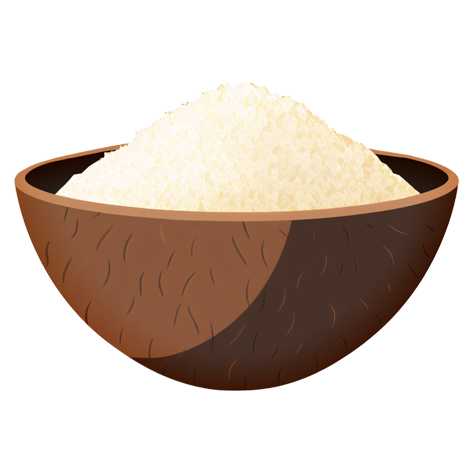
Shredded Coconut
A sweet and chewy ingredient often used in baking, smoothies, and tropical dishes, shredded coconut adds texture and a rich coconut flavor to both sweet and savory recipes.
45
1 tbsp
(80 grams)
CAL
C
Nutri-Score
Healthy fats and iron, but also high in saturated fat.
Value per 100 grams & per cup (80gr):
660 kcal | 530 kcal
Protein
7 grams | 5.5 grams
Fats
65 grams | 51 grams
Carbohydrates
25 grams | 20 grams
Fiber
16 grams | 5.5 grams
Vitamins & Nutrients
- Iron: Supports red blood cell production and oxygen transport.
- Magnesium: Helps regulate muscle and nerve function.
- Zinc: Strengthens the immune system.
- Lauric Acid: A saturated fat with antimicrobial properties found in coconuts.
Satiety and Feelings
Shredded coconut is high in fat and fiber, which can provide longer-lasting satiety. Its dense texture and slow digestion make it a filling addition to meals or snacks.
What does 100 grams look like?
Roughly 1 ¼ cups of loosely packed shredded coconut.
What does 2000 | 2500 calories look like?
About 4 cups or 320 grams (0.5 lbs. / 0.5 kg).
Daily Value per 100 grams %
Did you know?
In many cultures, the entire coconut is used — from the meat and water to the shell and husk, which can be turned into bowls, rope, or fuel.
Shredded coconut is often unsweetened or lightly sweetened, and can be toasted to enhance flavor.
It contains medium-chain triglycerides (MCTs), which may be used by the body as a quick energy source.
Used in many global cuisines, especially in Southeast Asian, Indian, and Caribbean cooking.
Drawbacks ⚠️
High in saturated fat, which may impact heart health if eaten excessively.
Low in protein, making it less ideal as a standalone source of nutrition.
Can be calorie-dense, so portion control is important, especially when used in baking or desserts.
Some store-bought varieties include added sugars, so check labels if you’re limiting sugar intake.