Fruit Jam

Dried Fruit
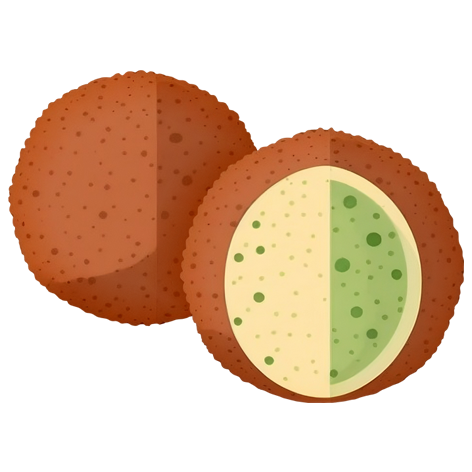
Falafel
Made from ground chickpeas or fava beans, mixed with herbs like parsley, cilantro, and spices such as cumin and coriander. Falafel is often served in pita bread, with tahini sauce, salad, or as part of a mezze platter.
100
1 ball
(30 grams)
CAL
B
Nutri-Score
Protein-rich, fiber-packed.
Value per 100 grams & per cup (150gr):
330 kcal | 500 kcal
Protein
13 grams | 20 grams
Fats
17 grams | 25 grams
Carbohydrates
30 grams | 45 grams
Fiber
8 grams | 12 grams
Vitamins & Nutrients
- Iron: Important for oxygen transport and energy.
- Magnesium: Supports muscle and nerve function.
- Vitamin B6: Aids in brain development and function.
- Folate: Crucial for DNA synthesis and repair.
Satiety and Feelings
Falafel’s combination of protein, fiber, and fats helps keep you full and energized for a longer time, making it a satisfying snack or meal addition.
What does 100 grams look like?
About 3 falafel balls.
What does 2000 | 2500 calories look like?
About 18 to 25 falafel balls (3 to 4 cups / 3.0 kg / 6.5 lbs)
Daily Value per 100 grams %
Did you know?
Falafel is a traditional Middle Eastern food, popular across many countries.
The main ingredient is usually chickpeas or fava beans, soaked and ground before frying.
Spices like cumin and coriander give falafel its signature flavor.
Falafel can be baked or fried, with baking reducing fat content.
It is a common vegetarian and vegan protein source.
Drawbacks ⚠️
Traditional falafel is deep-fried, adding extra calories and fats.
Store-bought or restaurant falafel may contain added salt or preservatives.
Large portions can increase calorie intake quickly.
Some may find falafel heavy or greasy if overconsumed.