Guacamole
Fruit Jam
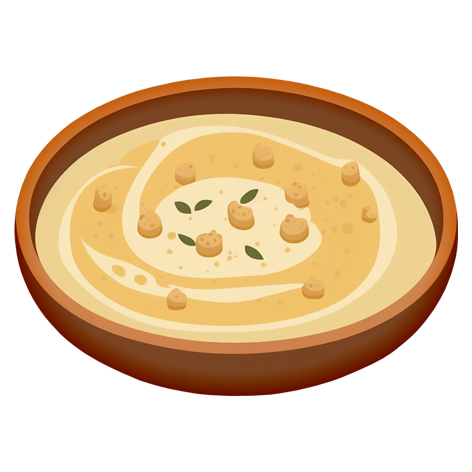
Hummus
A creamy Middle Eastern spread made from chickpeas, tahini (sesame paste), olive oil, garlic, and lemon juice. Hummus is popular as a dip, sandwich spread, or side dish, known for its smooth texture and nutty, tangy flavor.
25
1 tbsp
(15 grams)
CAL
B
Nutri-Score
Rich in plant-based protein, fiber, and healthy fats.
Value per 100 grams & per cup (240gr):
165 kcal | 400 kcal
Protein
8 grams | 10 grams
Fats
10 grams | 25 grams
Carbohydrates
15 grams | 35 grams
Fiber
6 grams | 15 grams
Vitamins & Nutrients
- Iron: Helps transport oxygen in the blood.
- Folate: Essential for cell repair and development.
- Vitamin B6: Supports brain function and mood regulation.
- Magnesium: Aids in muscle function and energy production.
Satiety and Feelings
Thanks to its fiber and fat content, hummus provides a sense of lasting fullness and is especially satisfying when paired with veggies or whole grain crackers.
What does 100 grams look like?
About ⅓ cup of hummus.
What does 2000 | 2500 calories look like?
Roughly 2¾ to 3¾ cups (830 grams / 1.85 lbs)
Daily Value per 100 grams %
Did you know?
Hummus dates back to 13th-century Middle Eastern cuisine and has spread worldwide.
The main ingredient, chickpeas, are a complete protein when paired with grains.
Tahini, made from sesame seeds, adds calcium, iron, and a rich, nutty taste.
Hummus is a staple in vegetarian and vegan diets for its nutrient density.
Drawbacks ⚠️
Store-bought hummus may contain preservatives, excess oil, and salt.
Overeating hummus with chips or bread can lead to high calorie intake.
Some varieties may contain added sugars or artificial flavorings.
Those with sesame allergies should avoid traditional hummus.