Santa Claus melon

Peach
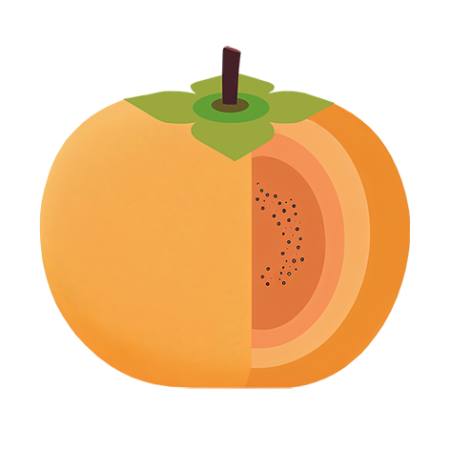
Persimmon
Vibrant, sweet fruits with a honey-like flavor. They are packed with nutrients and make a delicious, nutritious snack.
135
1 medium fruit
(170 grams)
CAL
A
Nutri-Score
Rich in vitamins, antioxidants, and fiber, with low fat and sugar content.
Value per 100 grams & per cup (235g):
80 kcal / 120 kcal
Protein
0.5 grams / 1 gram
Fats
0.2 grams / 0.3 grams
Carbohydrates
21.5 grams / 32.5 grams
Fiber
3.5 grams / 5.5 grams
Vitamins & Nutrients
- Vitamin A: Supports vision, immune system, and skin health.
- Vitamin C: Boosts immunity, helps with wound healing, and is an antioxidant.
- Potassium: Important for maintaining healthy blood pressure.
- Manganese: Helps with metabolism and bone health.
Satiety and Feelings
Persimmons have a soft, almost jelly-like texture when fully ripe, offering a sweet, refreshing experience that is hydrating and satisfying.
What does 100 g look like?
About ½ of a medium-sized persimmon or a 1/2 cup when sliced or diced
What does 2000/2500 calories look like?
About 20 persimmons.
Daily Value per 100 %
Did you know?
Ancient Fruit: Persimmons are believed to have originated in China over 2,000 years ago and have since spread across Asia and the Mediterranean.
Non-Astringent Varieties: There are two main types of persimmons—stringy astringent ones that need to ripen fully before consumption and non-astringent varieties that can be eaten while still firm.
Medicinal Use: In traditional medicine, persimmons have been used to treat digestive issues, improve skin health, and reduce inflammation.
- Commercial persimmons are mainly of two types: Fuyu, which are non-astringent and can be eaten while firm, and Hachiya, which are astringent and must be fully ripe and soft before eating. The term “kaki” fruit is often used in commercial markets, especially in Europe and Asia, to refer to the Fuyu persimmon.
Drawback ⚠️
High Sugar Content: While persimmons are nutritious, their sugar content is on the higher side, which may not be suitable for those managing blood sugar levels.
Astringency: Unripe persimmons have astringent properties, which can cause an uncomfortable, puckering sensation in the mouth if consumed prematurely.
Storage Sensitivity: Persimmons are highly perishable and should be stored carefully to avoid spoiling quickly.