Papaya

Mullberry
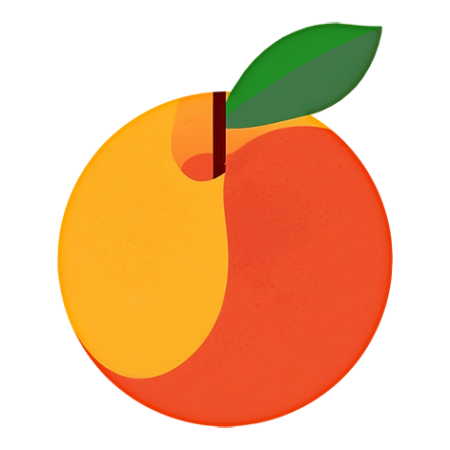
Nectarine
A juicy, sweet stone fruit similar to a peach but with smooth skin, nectarines are delicious eaten fresh or added to salads and desserts.
65
1 medium fruit
(150 grams)
CAL
A
Nutri-Score
Contains fiber, vitamins A and C, and antioxidants.
Value per 100 grams & per cup (155g):
45 kcal / 70 kcal
Protein
0.3 grams / 0.5 grams
Fats
0.2 grams / 0.3 grams
Carbohydrates
15 grams / 17 grams
Fiber
2.5 grams / 3 grams
Vitamins & Nutrients
- Vitamin C: Supports immune function and collagen production.
- Potassium: Helps regulate fluid balance and muscle contractions.
- Quercetin: A powerful antioxidant that may support heart health.
- Folate: Aids in DNA synthesis and cell growth.
Satiety and Feelings
Nectarines are sweet and juicy, providing hydration and mild sweetness. The fiber helps with digestion and satiety.
What does 100 g look like?
About half a medium nectarine, sliced or about 1/2 cup when chopped.
How many to reach 2000/2500 calories?
About 40 nectarines.
Daily Value per 100 grams %
Did you know?
Nectarines are related to apples, peaches, and plums, and they all belong to the Rosaceae family, making them part of the stone fruit group.
Nectarines are essentially a smooth-skinned mutation of peaches, resulting from a genetic change that removes their fuzz, but they’re still part of the same species (Prunus persica).
Originating in China over 2,000 years ago, nectarines were initially referred to as “peaches without fuzz” due to their close resemblance to peaches.
The fruit was introduced to Europe and North America via trade routes during the Roman Empire, and it quickly became popular across many regions.
- The name nectarine comes from the word “nectar,” referring to its juicy, sweet flavor.
Drawback ⚠️
Nectarines can be high in natural sugars, which may not be ideal for people monitoring their sugar intake.
The skin of nectarines is thin and can sometimes be tough to digest for individuals with sensitive stomachs.
Nectarines can cause allergic reactions in some people who are sensitive to other fruits in the Rosaceae family, such as peaches or cherries.