Canary Melon

Carambola
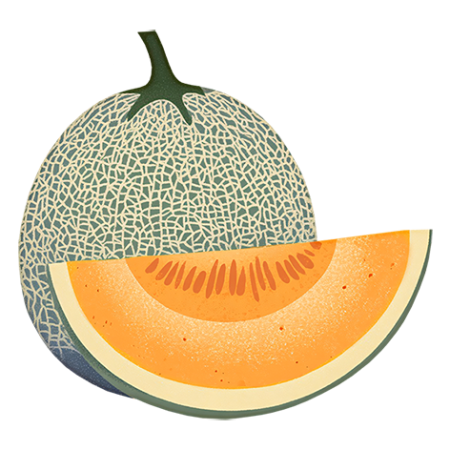
Cantaloupe
A sweet, refreshing fruit packed with nutrients, especially vitamin C. It's low in calories and a great way to hydrate and support your immune system.
50
1 medium wedge
(150 grams)
CAL
A
Nutri-Score
Low in calories, rich in water content, and packed with vitamins and minerals.
Value per 100 grams & per cup (160g):
35 kcal / 55 kcal
Protein
0.8 grams / 1.2 grams
Fats
0.2 grams / 0.3 grams
Carbohydrates
8 grams / 12 grams
Fiber
10 grams / 1.35 grams
Vitamins & Nutrients
- Vitamin C: Supports immune function and skin health.
- Vitamin A (Beta-carotene): Promotes healthy vision and skin.
- Potassium: Helps maintain fluid balance and muscle function.
- Magnesium: Supports nerve function and muscle relaxation.
Satiety and Feelings
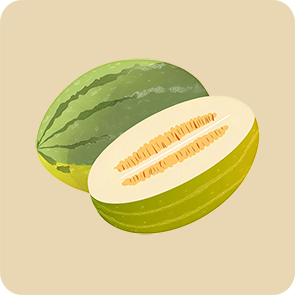
Cantaloupe has a high water content, which makes it hydrating and cooling. Its juicy, sweet flesh makes it feel refreshing, especially during the hot summer months.
What does 100 g look like?
About 1/10th of a melon or about 1/2 cup of diced cantaloupe.
What does 2000/2500 calories look like?
About 6 melons.
Daily Value per 100 grams %
Did you know?
Cantaloupe is rich in beta-carotene, which the body converts into vitamin A, promoting healthy skin and vision.
The name “cantaloupe” comes from the Italian town of Cantalupo, where the melon was first cultivated in Europe.
Cantaloupe is part of the gourd family, which also includes cucumbers, pumpkins, and squash.
Drawback
High in sugar: Cantaloupe contains natural sugars that can contribute to calorie intake, especially if consumed in large quantities.
Possible allergic reactions: Some people may experience allergic reactions like itching or swelling when eating cantaloupe due to a sensitivity to certain proteins in the fruit.
Digestive issues: Overeating cantaloupe may cause bloating or digestive discomfort, especially for those with sensitive stomachs.