Apricot

Ackee

Akebi
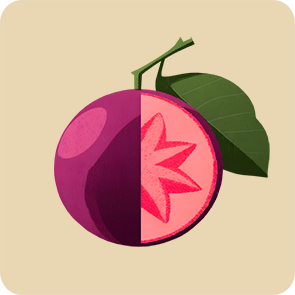
Akebi, also known as the “chocolate vine fruit,” is a unique purple fruit native to Japan, with a sweet, jelly-like pulp inside a thick, edible skin. It’s enjoyed fresh or in traditional dishes.
70
1 medium fruit
(200 grams)
CAL
A
Nutri-Score
Rich in dietary fiber, also a source of antioxidants and vitamin C.
Value per 100 grams & per cup (150g):
80 kcal | 125 kcal
Protein
1 gram | 1.5 grams
Fats
0.2 grams | 0.3 grams
Carbohydrates
6 grams | 9 grams
Fiber
3 grams | 4.5 grams
Vitamins & Nutrients
- Vitamin C: Supports immune function and skin health.
- Vitamin A: Helps maintain healthy vision.
- Potassium: Promotes fluid balance and muscle function.
- Antioxidants (Polyphenols): Protect against inflammation and oxidative stress.
Satiety and Feelings
Akebi is low in calories but high in fiber and water content, providing moderate fullness and a refreshing taste, making it a good light snack.
What does 100 g look like?
About two-thirds of a medium Akebi fruit or ⅔ cup of pulp.
How many to reach 2000/2500 calories?
About 80 | 100 medium Akebi fruits or 53 | 66 cups of pulp (16 kg / 35 lbs).
Daily Value per 100 grams %
Vitamin C
15%
Vitamin B6
10%
Vitamin A
2%
Potassium
5%
Fiber
12%
Protein
1%
Sodium (Salt)
0%
Carbohydrates
2%
Total Fat
0%
Saturated Fat
Saturated Fat
0%
Cholesterol (free)
0%
Sugar (natural)
0%
Calories
1%
Did you know?
- Akebi is native to Japan and considered a delicacy in autumn.
- The fruit’s purple skin is edible but often bitter, while the white pulp is sweet and fragrant.
- It is traditionally used in Japanese cuisine, including stuffing the skin with savory fillings.
Drawback
- The skin’s bitter taste may not appeal to everyone.
- Akebi is seasonal and relatively rare outside of East Asia.
- Low in protein and fats, so not very filling on its own.