Octopus

Pangasius
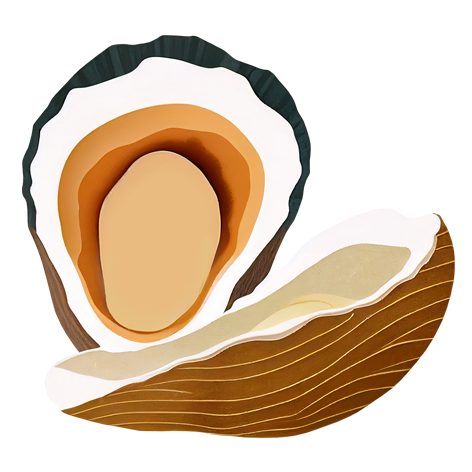
Oyster
Oysters are not only a delicious delicacy and make a sophisticated snack or can be enjoyed in various dishes like stews, salads, or served raw.
10
1 medium oyster
(20 grams)
CAL
A
Nutri-Score
High in protein, low in fat, and packed with essential minerals but high in sodium.
Value per 100 grams & per cup (150g):
50 kcal | 75 kcal
Protein
7 grams | 10.5 grams
Fats
2.5 grams | 3.5 grams
Carbohydrates
4 grams | 6 grams
Fiber
None
Vitamins & Nutrients
- Zinc: Essential for immune function and wound healing.
- Iron: Important for oxygen transport and energy production.
- Vitamin B12: Supports nerve function and red blood cell formation.
- Omega-3 fatty acids: Promotes heart and brain health.
Satiety and Feelings
Oysters are rich in protein, helping to satisfy hunger and provide long-lasting energy. Their mineral content can also support overall health, contributing to a feeling of well-being after eating.
What does 100 g look like?
About 4 medium oysters or ½ cup of shucked oysters.
What does 2000/2500 calories look like?
Roughly 230 oysters or about 20 cups shucked (5 kg / 11 lbs)
Other types of Oysters (100 grams | 3.5 ounces)
| Species | Calories (per 100g) | Notes |
|---|---|---|
| Belon Oyster (European Flat Oyster) | ~80 kcal | Renowned for its deep, mineral flavor; native to Europe; prized for its briny, intense taste. |
| Pacific Oyster | ~80 kcal | Famous worldwide; farmed on both coasts of the U.S. and many other countries; mild, sweet flavor. |
| Kumamoto Oyster | ~70 kcal | Small, sweet oysters; highly sought-after for their mild flavor and smooth, creamy texture. |
| Blue Point Oyster | ~70 kcal | Native to the U.S. East Coast; known for their clean, briny flavor with a firm texture. |
| Wellfleet Oyster | ~75 kcal | From Wellfleet Harbor in Massachusetts; highly regarded for its clean, briny taste and smooth texture. |
| Galway Oyster | ~80 kcal | Grown in the cool, clean waters of Ireland; known for their complex flavor, slightly sweet with a salty finish. |
Daily Value per 100 grams %
Did you know?
- Oysters are filter feeders, cleaning up to 50 gallons of water per day—helping keep ocean ecosystems healthy.
- They can change sex during their lifetime depending on reproductive needs.
- They’ve been considered aphrodisiacs for centuries due to their zinc content but also because of their sensual, fleshy appearance. The famous lover Casanova reportedly ate 50 oysters for breakfast, believing they enhanced his romantic energy.
- Oysters are among the most sustainable seafoods, often farmed with minimal environmental impact.
- Their flavor is influenced by their environment, a concept known as “merroir”, like terroir in wine.
- Oysters have been consumed since prehistoric times, with ancient shell mounds found worldwide.
Drawback
Oysters are high in sodium, which could affect individuals with high blood pressure.
Raw oysters can pose a risk of foodborne illness due to bacteria like Vibrio vulnificus.
Shellfish allergies are common and can lead to severe reactions in sensitive individuals.
- Always check for the MSC label.