Cod

Crayfish
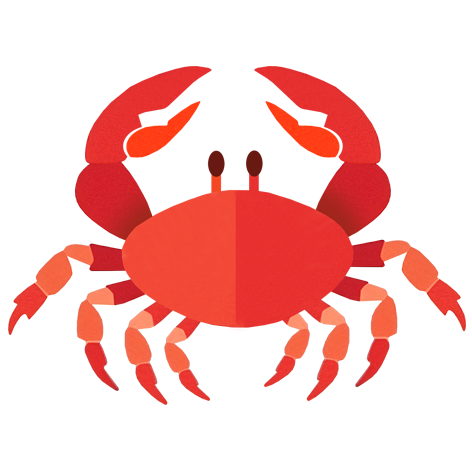
Crab
Delicately sweet and briny, crab meat is a lean source of high-quality protein and essential nutrients, making it a flavorful and nutritious option for seafood lovers.
130
1 cup
(135 grams)
CAL
A
Nutri-Score
High in protein, rich in vitamin B12, and low in fat.
Value per 100 grams & per cup (135g):
100 kcal / 130 kcal
Protein
20 grams / 25 grams
Fats
1.5 grams / 2 grams
Carbohydrates
None
Fiber
None
Vitamins & Nutrients
- Vitamin B12: Supports nerve health and red blood cell production.
- Zinc: Strengthens immune system and aids in wound healing.
- Phosphorus: Essential for bone health and energy production.
- Selenium: Acts as a powerful antioxidant and supports thyroid function.
Satiety and Feelings
Crab meat is high in protein, making it filling and satisfying, while being low in fat and carbs, making it a lean, nutritious choice.
What does 100 g look like?
About the size of a deck of cards, about ½ cup (loosely packed) crab meat.
What does 2000/2500 calories look like?
About 10 medium sized crabs (2.5 kg) or 15 cups.
Other types of crabs (100 grams | 3.5 ounces)
| Species | Calories (per 100g) | Notes |
|---|---|---|
| Blue Crab | ~95 kcal | Popular on the U.S. East Coast; sweet, tender meat; low in fat. |
| Dungeness Crab | ~110 kcal | Pacific Coast favorite; rich, slightly nutty flavor; good meat yield. |
| Snow Crab | ~90 kcal | Known for long legs and delicate, sweet meat; often used in seafood buffets. |
| King Crab | ~105 kcal | Large and meaty; prized for its rich taste; typically more expensive. |
| Mud Crab | ~115 kcal | Common in Southeast Asian cuisine; flavorful with firm, moist meat. |
| Stone Crab | ~95 kcal | Harvested for claws only; firm texture with a sweet, lobster-like flavor. |
Daily Value per 100 grams %
Vitamin B12 ⭐⭐⭐⭐⭐
100%
Zinc ⭐
60%
Selenium
65%
Copper
50%
Fiber
0%
Protein
40%
Sodium (Salt)
25%
Carbohydrates
1%
Total Fat
2%
Saturated Fat
1%
Cholesterol
30%
Sugar (natural)
0%
Calories
5%
Did you know?
- There are over 4,500 species of crab, but only a handful are commonly eaten, like the King crab, Snow crab, Dungeness crab, Blue crab and Mud crab.
- The Japanese spider crab has the largest leg span of any arthropod, reaching up to 4 meters (13 feet)! The largest edible crab is the Tasmanian giant crab, which can weigh up to 13 kg (29 lbs)!
- Some species of crabs can walk forward, sideways, swim and climb trees!
- Crabs communicate by drumming and waving their claws to signal danger or attract mates.
- Crabs can regenerate lost claws and legs over time.
- Crab shells are a source of chitin, which is used in medicine and agriculture.
Drawback
- Can be high in sodium, especially in processed or canned versions.
- Some people are allergic to shellfish, which can cause severe reactions.
- Certain crabs may contain mercury, though typically in lower amounts than larger seafood like tuna.
- Always check for the MSC label.