Eel

Fish Sauce
Fish Roe
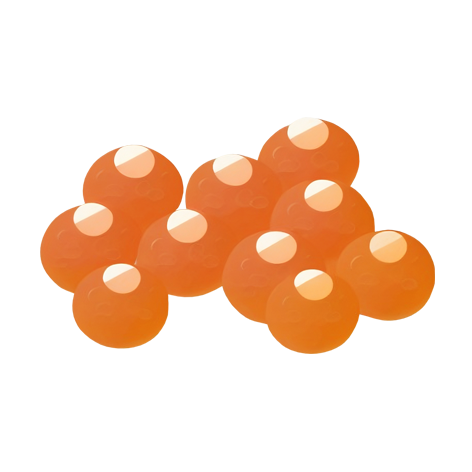
Fish eggs offers a nutrient-dense, savory burst of flavor. It’s a protein-rich delicacy packed with essential fatty acids and vitamins, commonly used in sushi, spreads, and gourmet dishes.
20
1 tbsp
(25 grams)
CAL
B
Nutri-Score
Rich in omega-3 fatty acids, vitamin B12, and high-quality protein.
Value per 100 grams & per cup (125g):
140 kcal / 175 kcal
Protein
25 grams / 30 grams
Fats
6 grams / 7.5 grams
Carbohydrates
1 gram / 1.2 grams
Fiber
None
Vitamins & Nutrients
- Vitamin B12: Crucial for nerve health and red blood cell production.
- Omega-3 fatty acids: Promote heart health and reduce inflammation.
- Vitamin D: Supports bone health and immune function.
- Selenium: Acts as a powerful antioxidant.
Satiety and Feelings
Fish roe delivers a salty, umami-rich taste that’s deeply satisfying in small amounts. Its high protein and fat content make it quite filling despite its small volume.
What does 100 g look like?
About 4 tablespoons or 1/2 cup of roe.
What does 2000/2500 calories look like?
About 13 cups of fish roe (1.5 kg).
Other types of fish roe (100 grams | 3.5 ounces)
| Species | Calories (per 100g) | Notes |
|---|---|---|
| Salmon Roe (Ikura) | ~150 kcal | Large, vibrant orange eggs; slightly briny and firm texture; a delicacy in Japanese cuisine. |
| Sturgeon Roe (Caviar) | ~250 kcal | Luxury item; small, black eggs with a rich, briny flavor; includes varieties like Beluga, Ossetra, and Sevruga. |
| Trout Roe | ~160 kcal | Smaller than salmon roe; delicate texture with a milder, slightly sweet flavor; often used in gourmet dishes. |
| Capelin Roe (Masago) | ~250 kcal | Small, crunchy eggs; commonly used in sushi rolls and as a garnish; bright orange or yellow color. |
| Mackerel Roe | ~130 kcal | Small, salty eggs with a firmer texture; popular in East Asian cuisine, especially in Korea and Japan. |
| Herring Roe | ~190 kcal | Small, translucent eggs with a briny taste; commonly used in Scandinavian and Eastern European dishes. |
Daily Value per 100 grams %
Did you know?
Fish roe is a delicacy in many cultures, from Japanese ikura to Russian caviar.
It’s one of the most omega-3-dense natural foods, especially valued in pregnancy diets.
Roe is rich in choline, which supports brain health and liver function.
The texture of roe can vary from soft and creamy (like cod roe) to firm and popping (like salmon roe or tobiko).
Some types of roe, like flying fish roe, are dyed in bright colors like orange, green, or black for sushi decoration.
Drawback
High in cholesterol, which may be a concern for those with heart disease risk.
Very salty, with high sodium content that can raise blood pressure if over-consumed.
Some types of roe may contain heavy metals or environmental contaminants, especially from larger fish.
Always check for the MSC label.