Canned Tuna

Caviar
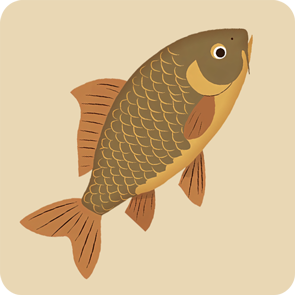
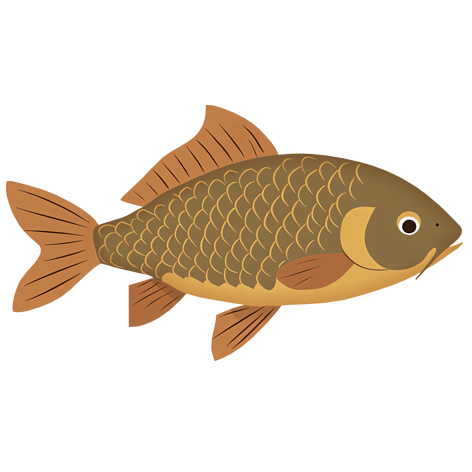
Carp
A popular fish with a mild, slightly sweet flavor, carp is widely consumed in Europe and Asia. It’s high in protein and offers a great alternative to other fatty fish like salmon.
195
1 medium fillet
(150 grams)
CAL
A
Nutri-Score
High in protein, rich in essential fatty acids, and a good source of minerals.
Value per 100 grams & per cup (150g):
130 kcal / 195 kcal
Protein
20 grams / 30 grams
Fats
5 grams / 7.5 grams
Carbohydrates
None
Fiber
None
Vitamins & Nutrients
- Vitamin B12: Vital for the formation of red blood cells and proper nerve function.
- Vitamin B3 (Niacin): Supports metabolism and skin health.
- Phosphorus: Important for bone health and energy production.
- Omega-3 fatty acids: Support heart health and cognitive function.
Satiety and Feelings
Carp provides satisfying protein and a firm, flaky texture that makes it ideal for grilling, baking, or frying.
What does 100 g look like?
About 1/3 of a medium fillet (size of a standard deck of playing cards) or 1/2 cup cooked carp.
What does 2000/2500 calories look like?
Roughly 17 fillets of carp (2.5 kg).
Daily Value per 100 grams %
Did you know?
- Carp have been domesticated for over 2,000 years in places like China and Eastern Europe.
- The largest species of carp, the Koi carp, can grow up to 3 feet long and weigh over 35 pounds.
- In Asian cultures, carp are often seen as a symbol of strength and perseverance due to their ability to swim upstream.
Drawback
Carp are often considered muddy-tasting due to their diet and habitat in murky waters, though this can be mitigated with proper preparation.
Farmed carp may have higher fat content compared to wild carp.
Prone to parasites like tapeworms, especially in wild-caught carp, requiring careful preparation.
- Carp have many small bones throughout their flesh, which can make eating difficult.
- Always check for the MSC label.