Steamed Bun

Taco
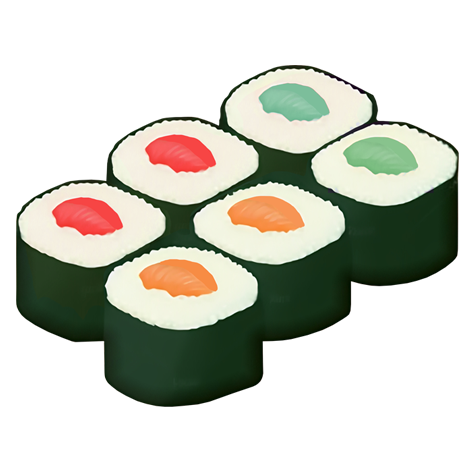
Sushi
A traditional Japanese dish consisting of vinegared rice combined with ingredients like raw fish, seaweed, vegetables, and sometimes egg or tofu.
30
1 piece of maki
(25 grams)
(200 calories in 1 roll)
CAL
C
Nutri-Score
Contains protein, omega-3 fatty acids, and vitamins, with lower sodium if soy sauce is included.
Value per 100 grams & per cup (150g):
145 kcal | 220 kcal
Protein
6 grams | 9 grams
Fats
2 grams | 3 grams
Carbohydrates
28 grams | 42 grams
Fiber
2 grams | 3 grams
Vitamins & Nutrients
- Vitamin B12: Supports nerve function and red blood cell production.
- Iron: Vital for oxygen transport in the blood.
- Zinc: Boosts immune function and helps wound healing.
- Niacin (B3): Aids metabolism and energy production.
Satiety and Feelings
Sushi offers a balanced mix of protein and carbohydrates with low fat, making it light but moderately filling. The presence of omega-3s supports brain health.
What does 1 roll look like?
About the size of a standard sushi roll, roughly 15 cm (6 inches) long, sliced into 6 pieces.
What does 100 g look like?
About 4 pieces of sushi.
What does 2000 | 2500 calories look like?
About 90 to 110 pieces, or 14 to 17 cups (1.4 to 1.7 kilograms / 3.1 to 3.7 lbs.)
Daily Value per 100 grams %
Did you know?
Sushi originated in Japan over 1,000 years ago as a method of preserving fish with fermented rice.
The most popular types include nigiri, maki, and sashimi (which is fish without rice).
Traditional sushi uses raw fish, but many modern varieties include cooked or vegetarian options.
Sushi is often served with soy sauce, but eating it without reduces sodium intake significantly.
Drawbacks ⚠️
Without soy sauce, sushi has lower sodium but still contains raw fish, which carries a small risk of foodborne illness.
Often low in fiber unless paired with vegetables or seaweed.