Arepa

Bitterbal

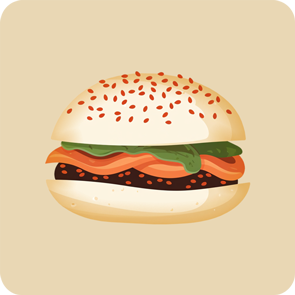
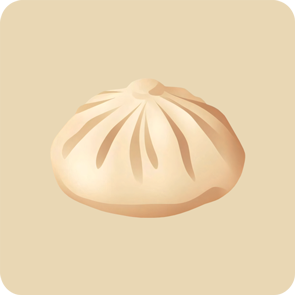
Bao Bun
A soft, steamed bun made from yeast-leavened wheat dough, bao buns are typically filled with savory items like pork, tofu, or vegetables. They're popular in Chinese cuisine and known for their fluffy texture.
275
1 medium bun
(100 grams)
CAL
C
Nutri-Score
Contains protein and some iron, but also refined carbohydrates, can be high in sodium, and low in fiber.
Value per 100 grams & per cup (160g):
275 kcal | 435 kcal
Protein
11 grams | 17.5 grams
Fats
8 grams | 13 grams
Carbohydrates
40 grams | 65 grams
Fiber
1 gram | 1.5 grams
Vitamins & Nutrients
- Iron: Helps form red blood cells.
- Vitamin B1 (Thiamine): Supports energy metabolism.
- Selenium: Contributes to immune function.
Satiety and Feelings
Bao buns are light and airy, but the filling adds weight and protein. A single bun may not offer long-lasting fullness unless paired with fiber-rich or protein-heavy fillings.
What does 1 bun look like?
About the size of a small fist—roughly 8 cm (3 inches) wide and 4–5 cm (1.5–2 inches) tall.
What does 100 g look like?
Roughly 1 medium filled bao or ⅔ cup packed.
What does 2000 | 2500 calories look like?
About 9 buns or 6 cups packed (900 grams / 2.0 lbs.)
Daily Value per 100 grams %
Did you know?
Baozi, or bao, originated in China over 1800 years ago.
Traditional buns are steamed, which keeps them soft and moist.
Fillings can range from savory meats to sweet red bean paste.
Modern bao may include fusion fillings like fried chicken or BBQ jackfruit.
Drawbacks ⚠️
Made from refined white flour, so lower in fiber than whole grains.
Can be high in sodium, especially with meaty or saucy fillings.
Low in healthy fats unless paired with oily fillings like pork belly.