Lasagna

Mozzarella Stick
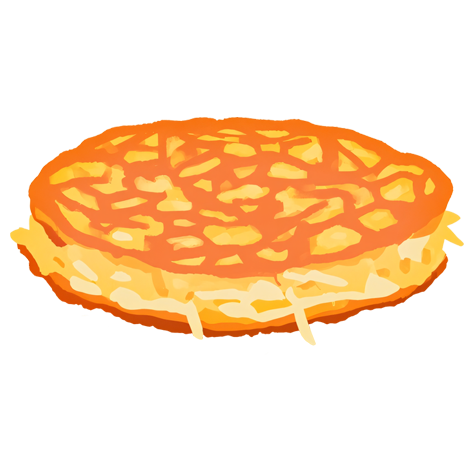
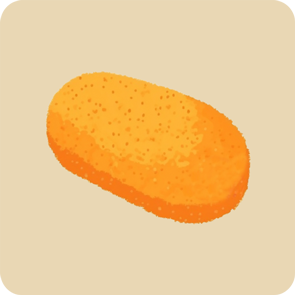
Hash Brown
A crispy, golden-brown potato patty, hash browns are a popular breakfast side, especially in American and British cuisines. They’re known for their crunchy outside and tender, shredded potato interior.
140
1 medium patty
(60 grams)
CAL
D
Nutri-Score
Contains carbohydrates and potassium but is often high in saturated fats and sodium.
Value per 100 grams & per cup (130g):
230 kcal | 300 kcal
Protein
2.5 grams | 3 grams
Fats
15 grams | 20 grams
Carbohydrates
20 grams | 26 grams
Fiber
2 grams | 2.5 grams
Vitamins & Nutrients
- Potassium: Helps regulate blood pressure and muscle function.
- Vitamin B6: Supports metabolism and brain function.
- Iron: Important for transporting oxygen in the blood.
- Vitamin C: Supports immune system and skin health.
Satiety and Feelings
Hash browns offer quick energy from carbs and feel satisfying due to their fat content. However, the low fiber means they may not keep you full for long.
What does 1 hash brown look like?
Roughly the size of a credit card, about 9 cm (3.5 inches) long, 6 cm (2.5 inches) wide, and 1.5 cm (½ inch) thick.
What does 100 g look like?
Roughly 1 ½ hash brown patties or about ¾ cup shredded hash browns.
What does 2000 | 2500 calories look like?
About 14–18 patties or 10 cups shredded (870 grams / 1.9 lbs.)
Daily Value per 100 grams %
Did you know?
Hash browns originated in the U.S. in the late 1800s as a way to use up leftover potatoes.
The name comes from the French word “hacher”, meaning “to chop.”
They’re now a staple of many fast food breakfast menus.
Some frozen versions contain preservatives and added starch to maintain texture and shelf life.
Drawbacks ⚠️
Often deep-fried, making them high in saturated fats.
Can contain added sodium and preservatives.
Typically made from refined potatoes, offering less fiber and nutrients than whole potatoes.