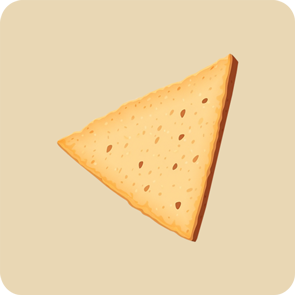
Puff Pastry Stick
Chicken Tender

Samosa
Samosas are triangular pastries filled with spiced potatoes, peas, lentils, or meat, and then deep-fried or baked. They are a popular snack in South Asian cuisine.
200
1 piece
(80 grams)
CAL
D
Nutri-Score
Contains carbohydrates and fat for energy, but is high in saturated fat and calories.
Value per 100 grams & per cup (120g):
260 kcal | 310 kcal
Protein
6 grams | 7 grams
Fats
14 grams | 17 grams
Carbohydrates
28 grams | 34 grams
Fiber
3 grams | 3.5 grams
Vitamins & Nutrients
- Vitamin C: Supports immune function and skin health.
- Vitamin A: Helps maintain healthy vision.
- Potassium: Promotes fluid balance and muscle function.
- Iron: Supports red blood cell formation.
Satiety and Feelings
Samosas provide quick energy from carbohydrates and fats. Moderate protein and fiber give some satiety, but the high fat content may reduce long-term fullness.
What does 100 g look like?
About one medium samosa, roughly 10 cm (4 inches) long per side.
What does 2000 | 2500 calories look like?
About 8–10 samosas, weighing 800–1,000 grams (1.8–2.2 lbs), or 6–8 cups chopped.
Daily Value per 100 grams %
Did you know?
Samosas originated in Central Asia and spread to South Asia, where they became a popular street snack.
The word “samosa” comes from the Persian “sanbosag,” meaning triangular pastry.
Traditionally, samosas are deep-fried, but baking is becoming popular for a healthier version.
Variations include vegetable, meat, or lentil fillings, each with regional spice blends.
Drawbacks ⚠️
High in saturated fat and calories, which can impact heart health if eaten in excess.
Contains refined flour, providing carbohydrates but limited fiber.
Often deep-fried, which adds extra fat and calories.