Quesadilla

Sausage Roll
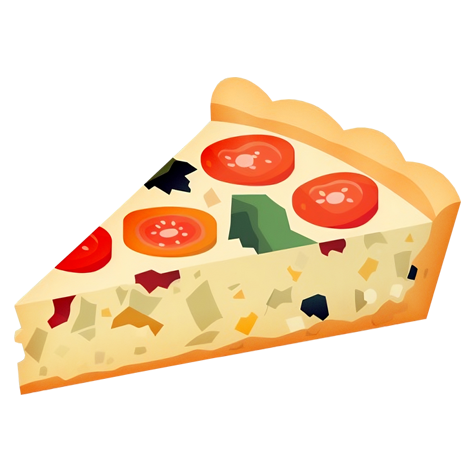
Quiche
A savory French tart made with a buttery pastry crust filled with a creamy egg and cheese custard, often combined with vegetables, bacon, or ham.
300
1 medium slice
(150 grams)
CAL
C
Nutri-Score
Contains protein, calcium, and vitamins, but also saturated fats and sodium from the crust and cheese.
Value per 100 grams & per cup (150g):
200 kcal | 300 kcal
Protein
10 grams | 15 grams
Fats
15 grams | 22 grams
Carbohydrates
12 grams | 18 grams - but can be higher
Fiber
1.5 grams | 2 grams
Vitamins & Nutrients
- Calcium: Supports strong bones and teeth.
- Vitamin A: Important for vision and immune function.
- Vitamin B12: Supports nerve health and red blood cells.
- Iron: Helps with oxygen transport in the blood.
Satiety and Feelings
Quiche is rich and creamy with moderate protein and fat, making it satisfying but often calorie-dense due to the buttery crust.
What does 1 serving look like?
One medium slice about 4 inches wide at the crust and 1 inch thick (150 grams).
What does 100 g look like?
Roughly two-thirds of a slice.
What does 2000 | 2500 calories look like?
About 7 slices, or 10 ½ cups (1 kilogram / 2.5 lbs.)
Ingredients
A buttery pastry crust, filled with a creamy mixture of eggs, milk or cream, cheese (often Swiss or cheddar), and optional fillings like bacon, spinach, or mushrooms.
Daily Value per 100 grams %
Did you know?
Quiche originated in Germany but became famous in France, especially the Quiche Lorraine with bacon.
The word “quiche” comes from the German word “kuchen,” meaning cake.
Quiche is popular as a brunch or light meal and can be served hot or cold.
Modern versions often include a variety of fillings like spinach, mushrooms, or seafood.
Drawbacks ⚠️
Often high in saturated fats from cheese and pastry.
Can be high in sodium, especially with processed meats.
The pastry crust adds refined carbs and calories.
Not typically high in fiber unless loaded with vegetables.