Rum
Soft Drink
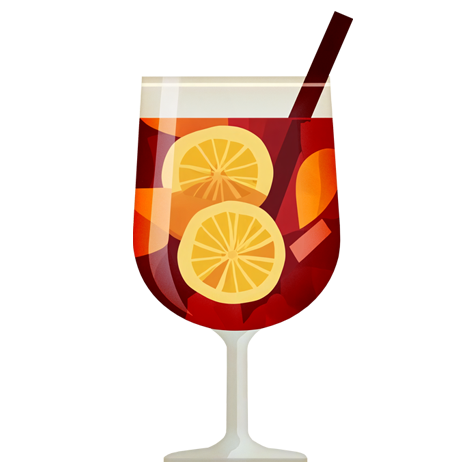
Sangria Wine
Sangria is a Spanish punch made from red wine, chopped fruit, and sometimes brandy or orange liqueur. It's a refreshing, sweet beverage often served chilled at summer gatherings.
165
1 glass
(175 ml)
CAL
E
Nutri-Score
High in sugar and alcohol.
Value per 100 ml & per cup (240ml):
95 kcal | 230 kcal
Protein
None
Fats
None
Carbohydrates
6 grams | 14.5 grams
Fiber
None
Vitamins & Nutrients
- Vitamin C: Provided by citrus fruits, supports immune function.
- Antioxidants: From red wine and fruits, may help reduce oxidative stress.
- Potassium: Present in fruits, aids fluid balance and muscle function.
Satiety and Feelings
Sangria is sweet and flavorful, often enjoyed as a treat. It offers quick energy from sugar but little satiety, and the alcohol may increase feelings of relaxation or light-headedness.
What does 1 glass (150 ml) look like?
About ⅔ of a cup — a small wine glass.
What does 100 ml look like?
Less than ½ cup.
What does 2000 | 2500 calories look like?
About 2.5 liters or 10 ½ cups.
Daily Value per 100 milliliter %
Did you know?
Sangria dates back to ancient Roman times, when wine was mixed with water and herbs to make it safer to drink.
The name comes from “sangre,” meaning “blood” in Spanish, due to its red color.
Traditional Sangria is made with red wine, brandy, orange juice, and fresh fruits like apples and oranges and sometimes an added cinnamon stick.
It’s commonly served cold with ice, especially during summer festivals in Spain and Portugal.
Drawbacks ⚠️
High in sugar, which can spike blood sugar and contribute to weight gain.
Contains alcohol, which adds empty calories and can dehydrate.
Often served in large portions, which can lead to overconsumption.
Nutrients from fruit may be minimal once steeped in alcohol and sugar.