Alcohol
Sesame Oil
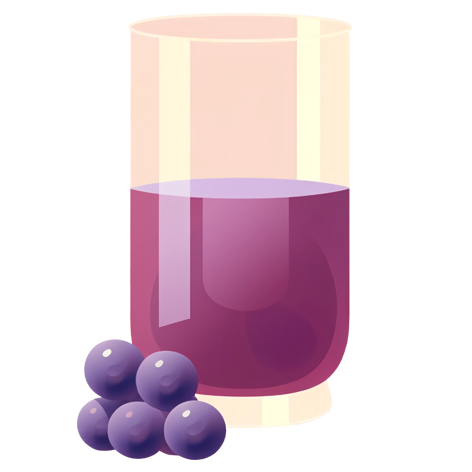
Grape Juice
Made by filtering and pasteurizing the liquid from pressed apples, apple juice is a smooth, sweet drink often served cold. Unlike cider, it's typically clear and shelf-stable.
150
1 glass
(240 ml)
CAL
D
Nutri-Score
Contains vitamin C and potassium, but also high in sugar and low in fiber and protein.
Value per 100 ml & per cup (240ml):
65 kcal | 150 kcal
Protein
0 grams | 1 gram
Fats
None
Carbohydrates
15 grams | 35 grams
Fiber
<1 gram | <1 gram
Vitamins & Nutrients
- Vitamin C: Supports immune function and skin health.
- Potassium: Helps regulate fluid balance and muscle function.
- Antioxidants (Polyphenols & Resveratrol): Help protect cells from oxidative stress.
Satiety and Feelings
Grape juice is sweet and refreshing, providing quick energy from natural sugars. Due to low protein, fat, and fiber, it does not provide lasting fullness.
What does 100 ml look like?
About half a cup, roughly a few sips of grape juice.
What does 2000 | 2500 calories look like?
about 15 cups or 3.5 liters.
Daily Value per 100 milliliter %
Did you know?
Grape juice is rich in polyphenols, especially resveratrol, which is linked to antioxidant and heart benefits.
Traditionally, grape juice was a base for wine, but fresh juice is consumed worldwide as a healthy beverage.
Grapes are one of the most antioxidant-rich fruits, even when juiced.
Juice can be used in smoothies, cocktails, and cooking, making it versatile.
Drawbacks ⚠️
High in natural sugar, which can contribute to blood sugar spikes.
Low in protein and fiber, so it does not provide satiety.
Can be high in calories if consumed in large quantities.
Juice lacks the fiber and bulk of whole grapes, reducing fullness and slowing sugar absorption.