
Pound Cake

Carrot Juice
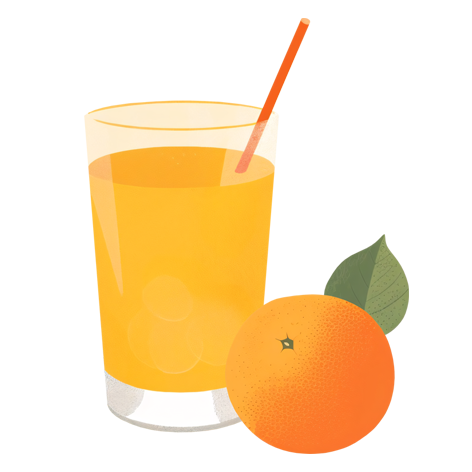
Orange Juice
A sweet, tangy beverage made from pressed oranges, orange juice is a breakfast staple around the world. Often consumed fresh or pasteurized, it delivers a refreshing dose of citrus flavor.
110
1 glass
(240 ml)
CAL
C
Nutri-Score
Contains vitamin C, potassium, and natural sugars, but lacks fiber and may spike blood sugar when consumed in excess.
Value per 100 grams & per cup (240ml):
45 kcal | 110 kcal
Protein
0.7 grams | 1.5 grams
Fats
0.2 grams | 0.5 grams
Carbohydrates
10 grams | 25 grams
Fiber
None
Vitamins & Nutrients
- Vitamin C: Supports immune function and skin health.
- Vitamin A: Helps maintain healthy vision.
- Potassium: Promotes fluid balance and muscle function.
- Folate: Important for DNA synthesis and cell growth.
Satiety and Feelings
Orange juice is refreshing and hydrating, but due to its lack of fiber, it’s less filling than whole fruit. The natural sugars can offer a quick burst of energy but may also cause blood sugar spikes.
What does 100 g look like?
About ⅖ of a cup or the size of a small juice glass.
What does 2000 | 2500 calories look like?
About 20 cups (5 liters / 10.5 lbs).
Daily Value per 100 milliliter %
Did you know?
Orange juice is one of the richest sources of vitamin C, offering over 100% of your daily needs in a single cup.
It’s often fortified with calcium and vitamin D, especially in the U.S.
The term “not from concentrate” means it’s been pasteurized but hasn’t had water removed and re-added.
Commercial orange juice can contain juice from up to 6 different countries to maintain year-round flavor consistency.
Drawbacks ⚠️
Contains no fiber, which means it lacks the gut benefits of whole fruit.
High natural sugar content may contribute to blood sugar spikes, especially when consumed without food.
May erode tooth enamel if sipped frequently throughout the day.
As a liquid, it is less satiating and easier to overconsume compared to eating whole oranges.