Cheese Cake

Amber Ale
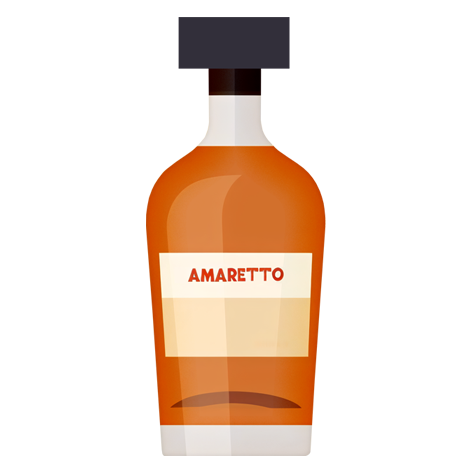
Amaretto
A sweet, almond-flavored liqueur, Amaretto is often used in cocktails, baking, or served neat. It has a smooth, syrupy texture and a distinctive nutty taste, despite often being made without actual almonds.
160
1 shot
(45 ml)
CAL
E
Nutri-Score
Contains small amounts of carbohydrates, but high in sugar.
Value per 100 ml & per cup (240ml):
350 kcal | 840 kcal
Protein
None
Fats
None
Carbohydrates
35 grams | 85 grams
Fiber
None
Vitamins & Nutrients
- None: Amaretto provides minimal to no vitamins or essential nutrients.
Satiety and Feelings
Amaretto’s high sugar content and alcohol can provide a temporary mood boost, but it offers no lasting satiety or nutritional benefits. Its sweetness may lead to overconsumption when mixed into drinks or desserts.
What does 1 shot (30 ml) look like?
About 2 tablespoons or just under ¼ cup—a standard bar shot glass.
What does 100 ml look like?
Just under ½ cup (roughly 6–7 tablespoons).
What does 2000 | 2500 calories look like?
Roughly 715 ml or 3 cups (almost 1 full bottle) (715 milliliters / 1.57 lbs / 0.72 kg)
Daily Value per 100 milliliter %
Did you know?
Amaretto means “a little bitter” in Italian, referring to its almond-like flavor.
It’s traditionally made from apricot kernels, almond essence, or both.
The Disaronno brand, one of the most famous Amarettos, dates back to 1525.
It’s used in cocktails like the Amaretto Sour and desserts like Tiramisu.
Drawbacks ⚠️
High in sugar, contributing to empty calories.
Contains alcohol, which can impair liver function and affect judgment.
Offers no fiber, vitamins, or nutrients.
May cause blood sugar spikes and energy crashes.