Pilsner Beer

Port Wine
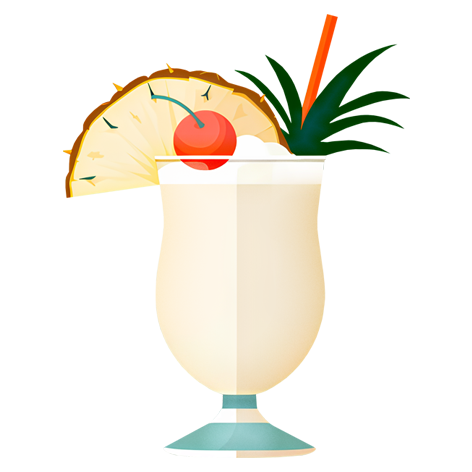
Piña Colada
The Piña Colada is a tropical cocktail made with rum, coconut cream, and pineapple juice. Known for its creamy texture and sweet, fruity flavor, it's often served blended with ice and garnished with pineapple or cherry.
270
1 glass
(180 ml)
CAL
E
Nutri-Score
Contains vitamin C from pineapple juice but is also high in sugars and saturated fats, mainly from coconut cream.
Value per 100 ml & per cup (240ml):
150 kcal | 360 kcal
Protein
1 gram | 2.5 grams
Fats
7 grams | 17 grams
Carbohydrates
17 grams | 41 grams
Fiber
0.5 grams | 1 gram
Vitamins & Nutrients
- Vitamin C: Supports immune health and skin repair.
- Iron: Contributes to oxygen transport in the blood.
- Potassium: Helps regulate fluid balance and muscle contractions.
Satiety and Feelings
The sugar and fat make piña colada rich and satisfying at first, but its lack of fiber and protein means it won’t keep you full for long. It can also lead to sugar spikes and cravings afterward.
What does 1 glass (150 ml) look like?
About ⅔ of a cup, usually served in a curved cocktail glass with ice.
What does 100 ml look like?
Just under ½ cup.
What does 2000 | 2500 calories look like?
About 1.2 liters or 5 cups.
Daily Value per 100 milliliter %
Did you know?
The Piña Colada originated in Puerto Rico in the 1950s and became the official national drink in 1978.
Its name means “strained pineapple” in Spanish.
Often associated with beach vacations, it became famous thanks to the 1979 hit song Escape (The Piña Colada Song).
A frozen piña colada contains even more calories due to added ice cream or sugar syrups.
Drawbacks ⚠️
High in sugar, which can spike blood sugar and lead to energy crashes.
Contains saturated fats from coconut cream, which may affect heart health if consumed excessively.
Very calorie-dense, especially in large or blended servings.