Béchamel Sauce

Horseradish
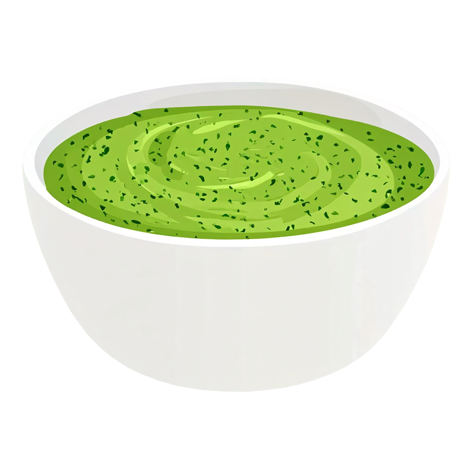
Pesto
A rich, herby Italian sauce made from basil, pine nuts, olive oil, Parmesan, and garlic. Pesto adds deep flavor to pasta, sandwiches, and vegetables.
80
1 tbsp
(15 ml)
CAL
E
Nutri-Score
Contains healthy fats and antioxidants, but high in sodium.
Value per 100 ml & per cup (240ml):
525 kcal | 1260 kcal
Protein
6 grams | 15 grams
Fats
50 grams | 120 grams
Carbohydrates
6 grams | 15 grams
Fiber
2 grams | 5 grams
Vitamins & Nutrients
- Vitamin K: Supports blood clotting and bone health.
- Vitamin E: Acts as an antioxidant, protecting cells.
- Calcium: Helps build and maintain strong bones.
- Iron: Supports oxygen transport in the blood.
Satiety and Feelings
Pesto’s fat content gives it a rich mouthfeel and quick satisfaction in small amounts. However, it's not high in fiber or protein, so it won’t keep you full for long unless paired with other foods.
What does 100 ml look like?
About 6 tablespoons or a little less than ½ cup of pesto.
What does 2000 | 2500 calories look like?
About 2¼ cups of pesto (460 grams / 1.01 lbs.)
Daily Value per 100 milliliters %
Did you know?
-
Pesto originated in Genoa, Italy, and dates back to the 16th century.
-
The name “pesto” comes from the Italian word pestare, meaning “to pound” or “crush.”
-
Traditional pesto uses mortar and pestle, though most modern versions are made in blenders.
-
Some pesto variations replace basil with kale, arugula, or sun-dried tomatoes.
Drawbacks ⚠️
-
High in calories and fat, especially when used in large quantities.
-
Sodium-rich, which may impact blood pressure.
-
Contains nuts and dairy, making it unsuitable for those with nut or lactose allergies.
-
Expensive if made with traditional pine nuts and Parmigiano-Reggiano.