Onion Soup

Pea Soup

Tomato Soup
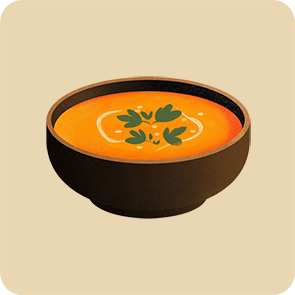
A warm, comforting soup made from ripe tomatoes, vegetable broth, and often flavored with herbs and spices. Tomato soup is rich in lycopene, a powerful antioxidant.
70
1 cup
(240 ml)
CAL
C
Nutri-Score
Low fat, with beneficial vitamins and antioxidants.
Value per 100 ml & per cup (240ml):
30 kcal | 70 kcal
Protein
1 gram | 2.5 grams
Fats
0.2 grams | 0.5 grams
Carbohydrates
6 grams | 14.5 grams
Fiber
1 gram | 2.5 grams
Vitamins & Nutrients
- Vitamin C: Boosts immune health and skin repair.
- Vitamin A: Supports eye health and immunity.
- Lycopene: An antioxidant linked to heart health and cancer prevention.
- Potassium: Regulates fluid balance and muscle function.
Satiety and Feelings
Tomato soup is light but satisfying, providing warmth and moderate fullness due to its fiber and protein content.
What does 100 ml look like?
About just under half a cup of soup.
What does 2000 | 2500 calories look like?
About 22 cups of tomato soup (5.3 liters / 11.7 lbs.)
Ingredients
Tomatoes, onions, garlic, vegetable or chicken stock, cream, and herbs.
Daily Value per 100 milliliters %
Did you know?
-
Tomato soup’s main ingredient, tomatoes, are rich in the antioxidant lycopene, which may reduce the risk of certain cancers.
-
In the 1800s, tomato soup was one of the first canned foods widely available, helping popularize convenient meal options.
-
Tomato soup has been linked to mood-boosting benefits due to its rich vitamin and antioxidant content.
-
The classic grilled cheese and tomato soup combo was popularized in the U.S. during the Great Depression as an affordable, filling meal.
Drawbacks ⚠️
-
Some commercial tomato soups can be high in sodium and added sugars.
-
Cream-based versions increase calorie and fat content significantly.
-
May not provide long-lasting fullness due to lower fiber than whole vegetables.