Winged Bean

Pili Nut
Candle Nut
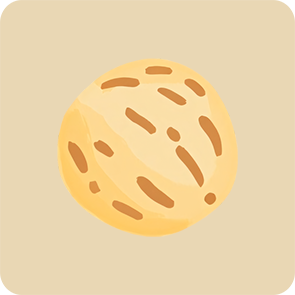
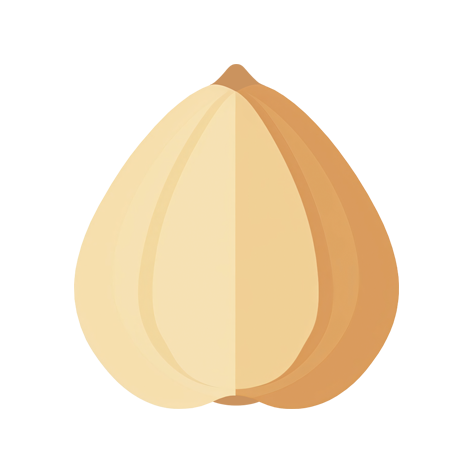
Candle nuts are small, round nuts with a high oil content. They are not eaten raw due to mild toxicity; they are usually roasted or ground and used as a thickening agent in traditional dishes, especially in Southeast Asian cuisine.
5
one nut
(10 grams)
CAL
C
Nutri-Score
Rich in healthy monounsaturated fats, magnesium, and iron; a great source of protein for a nut.
Value per 100 grams & per cup (120g):
700 kcal | 865 kcal
Protein
15 grams | 17 grams
Fats
80 grams | 95 grams
Carbohydrates
9 grams | 11 grams
Fiber
5 grams | 6 grams
Vitamins & Nutrients
- Vitamin E: Protects cells from oxidative damage.
- Magnesium: Supports muscle and nerve function.
- Phosphorus: Supports bone and teeth health.
- Potassium: Promotes fluid balance and muscle function.
Satiety and Feelings
Candle nuts are very high in fat and calories, providing long-lasting energy but small portions are enough to feel full.
What does 100 g look like?
About 10–12 whole candle nuts, roughly the size of large macadamia nuts.
What does 2000|2500 calories look like?
About 3 cups (120 g each) or 25–30 nuts, weighing 360–400 g (0.79–0.88 lbs).
Daily Value per 100 grams %
Did you know?
Candle nuts are native to Southeast Asia and are used primarily for cooking, not raw consumption.
They are often ground into pastes or roasted to thicken sauces in dishes like Indonesian sambal or curries.
Despite their name, they were historically used as candles due to their high oil content.
Candle nuts are cultivated commercially for culinary purposes across tropical Asia and the Pacific.
Drawbacks ⚠️
Toxic if eaten raw, must be cooked or roasted. It’s usually not eaten as a snack food but used more as a cooking ingredient or thickener.
Extremely high in calories and fat, so overconsumption can quickly contribute to excess calorie intake.
Hard texture requires preparation (grinding or roasting) before use.