Watermelon Seed

Sunflower Seed
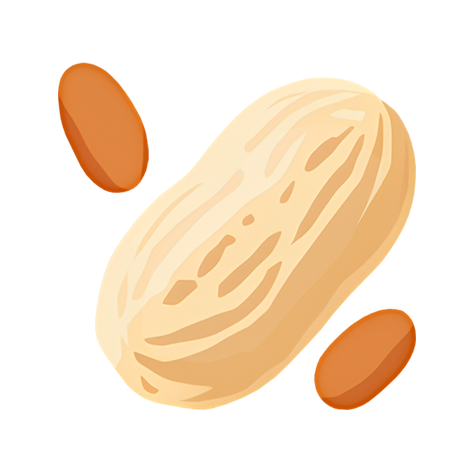
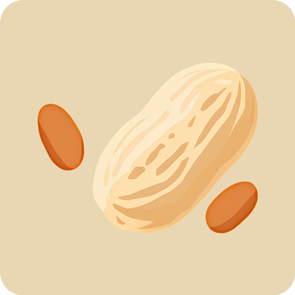
Peanut
Peanuts are a popular legume with a rich, nutty flavor and satisfying crunch. They are packed with protein, fiber, and essential nutrients, making them a great snack or ingredient in many dishes.
5
1 peanut
(1.5 grams)
CAL
A
Nutri-Score
High in protein, healthy fats, and fiber.
Value per 100 grams & per cup (145g shelled):
565 kcal | 830 kcal
Protein
25 grams | 38 grams
Fats
50 grams | 72 grams
Carbohydrates
15 grams | 23 grams
Fiber
10 grams | 13 grams
Vitamins & Nutrients
- Niacin (Vitamin B3): Supports metabolism and skin health.
- Folate: Important for DNA synthesis and cell growth.
- Vitamin E: Protects cells from oxidative damage.
- Magnesium: Supports muscle and nerve function.
Satiety and Feelings
Peanuts provide a satisfying crunch and rich flavor that help curb hunger, thanks to their protein, fiber, and healthy fats.
What does 100 g look like?
About 140 shelled peanuts, or roughly 3/4 cup.
What does 2000|2500 calories look like?
About 500–625 shelled peanuts, or 720–900 grams / 25–32 oz / 1.6–2 lbs, roughly 5 to 6 cups.
* Bad or good fats?
Contains Monounsaturated Fats: Help reduce LDL (bad) cholesterol and support heart health. So nutritionally, this is protective fat, not harmful fat.
Daily Value per 100 grams %
Did you know?
Peanuts are actually legumes, related to beans and lentils, not true nuts.
They are widely used to make peanut butter, a staple in many households.
Peanuts can help lower bad cholesterol when eaten in moderation.
The U.S. is the world’s largest producer of peanuts.
Peanuts have been cultivated for over 7,000 years.
Drawbacks ⚠️
Peanuts are a common allergen and can cause severe allergic reactions.
Often roasted with added salt or oil, increasing sodium and calories.
Can cause digestive issues in some people due to their fiber content.