Peanut
Sesame Seed
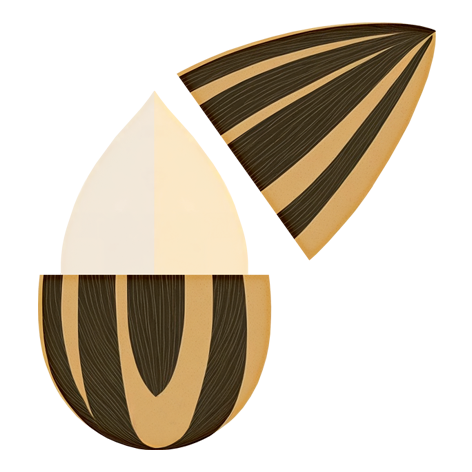
Sunflower Seed
Crunchy and nutrient-rich, sunflower seeds are a great snack packed with healthy fats, protein, and antioxidants to support overall health.
60
1 tbsp
(10 grams, raw and shelled)
CAL
A
Nutri-Score
High in protein, and vitamin E but rich in (healthy) fats.
Value per 100 grams & per cup (140g):
580 kcal | 800 kcal
Protein
20 grams | 30 grams
Fats
50 grams | 70 grams
Carbohydrates
20 grams | 28 grams
Fiber
10 grams | 13 grams
Vitamins & Nutrients
- Omega-3 fatty acids: Promote brain function and reduce inflammation.
- Vitamin E: Supports skin health and acts as an antioxidant.
- Magnesium: Helps with nerve function and muscle health.
- Polyphenols: Plant compounds that fight oxidative stress.
Satiety and Feelings
Sunflower seeds offer a satisfying crunch and rich flavor. The combination of protein, fiber, and healthy fats helps keep hunger at bay and provides steady energy.
What does 100 g look like?
About 2/3 cup or just over 1/3 cup shelled sunflower seeds.
What does 2000|2500 calories look like?
About 3 cups (420 grams | 0.93 lbs) of raw shelled sunflower seeds.
* Bad or good fats?
Contains Monounsaturated Fats: Help reduce LDL (bad) cholesterol and support heart health. So nutritionally, this is protective fat, not harmful fat.
Daily Value per 100 grams %
Did you know?
Sunflower seeds were first domesticated around 3000 BC by Native Americans.
The seeds are not only edible but also used to produce sunflower oil, a popular cooking oil worldwide.
Sunflower seeds are a natural source of vitamin E, which helps protect skin and eyes.
Sunflowers track the sun’s movement in a process called heliotropism during their growth.
Drawbacks ⚠️
High in calories and fats, so portion control is important.
May cause allergic reactions in some people sensitive to seeds or nuts.
Often salted, which can increase sodium intake if consumed in excess.