Chia Seed

Buckwheat
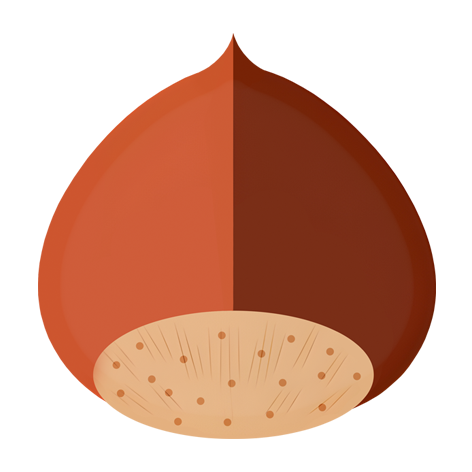
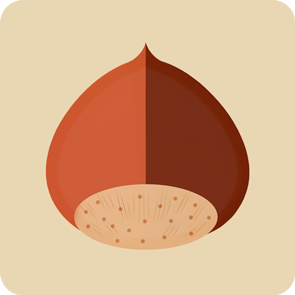
Chestnut
Chestnuts have a sweet, earthy flavor and a starchy texture, more like a potato than a typical nut. Unlike most nuts, they are low in fat and high in complex carbohydrates, making them a unique energy source with fewer calories.
35
1 nut
(20 grams)
CAL
A
Nutri-Score
Low in fat, rich in complex carbs, fiber, and vitamin C — very different from other nuts!
Value per 100 grams & per cup (90g):
170 kcal | 155 kcal
Protein
2 grams | 1.8 grams
Fats
0.6 grams | 0.5 grams
Carbohydrates
37 grams | 33 grams
Fiber
5 grams | 4.5 grams
Vitamins & Nutrients
- Vitamin C: Supports immune health and collagen production.
- Vitamin B6: Important for brain health and energy metabolism.
- Potassium: Helps maintain normal blood pressure.
- Manganese: Supports bone formation and antioxidant function.
Satiety and Feelings
Chestnuts offer a warm, satisfying fullness due to their starchy nature. They digest more slowly than sugary snacks and can curb hunger without adding much fat.
What does 100 g look like?
About 6–7 whole roasted chestnuts or 2/3 cup peeled and chopped.
What does 2000|2500 calories look like?
About 65–85 whole roasted chestnuts, or 1.1–1.4 kg / 2.4–3.1 lbs, roughly 8 to 10 cups peeled and chopped.
Daily Value per 100 grams %
Did you know?
Chestnuts are the only nuts that contain vitamin C.
They’ve been cultivated for over 2,000 years, especially in southern Europe and Asia.
Roasting chestnuts enhances their natural sweetness and breaks down tannins that can cause bitterness.
Chestnuts are traditionally eaten around winter holidays and are popular in stuffing and soups.
Unlike other nuts, chestnuts are mostly carbohydrate instead of fat-based.
Drawbacks ⚠️
Spoil faster than other nuts due to high moisture — they must be stored properly.
May cause digestive discomfort if eaten raw (they contain tannins).
Low in fat and protein, so they’re less ideal as a protein-rich snack.