Walnut
Watermelon Seed

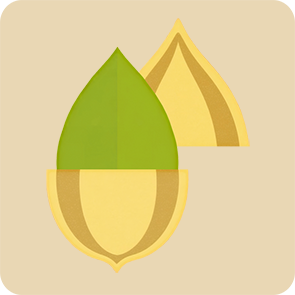
Pistachio
Pistachios are small, flavorful nuts with a natural mild sweetness and a satisfying crunch. They’re rich in protein, fiber, and antioxidants, making them a great snack for energy and fullness.
5
1 drupe
(0.5 grams)
CAL
A
Nutri-Score
Rich in healthy fats, protein, and fiber.
Value per 100 grams & per cup (125g):
560 kcal | 690 kcal
Protein
20 grams | 25 grams
Fats
45 grams | 55 grams
Carbohydrates
28 grams | 34 grams
Fiber
10 grams | 12 grams
Vitamins & Nutrients
- Vitamin B6: Supports metabolism and brain health.
- Potassium: Helps regulate fluid balance and muscle function.
- Copper: Important for energy production and immune health.
- Antioxidants (Lutein & Zeaxanthin): Protect eye health.
Satiety and Feelings
Pistachios provide a crunchy, slightly sweet snack that helps curb hunger due to their fiber and protein content, supporting longer-lasting fullness.
What does 100 g look like?
About 160 shelled pistachios, or roughly 3/4 cup.
What does 2000|2500 calories look like?
About 570–715 shelled pistachios, or 710–890 grams / 25–31 oz / 1.6–2 lbs, roughly 4.5 to 5.5 cups.
* Contains Monounsaturated Fats: Help reduce LDL (bad) cholesterol and support heart health.
Daily Value per 100 grams %
Did you know?
Pistachios are one of the oldest nuts, dating back over 9,000 years.
They’re sometimes called the “smiling nut” because of their naturally split shells.
Pistachios grow in clusters on trees that thrive in hot, dry climates.
They contain more potassium than a banana by weight.
Pistachios are often eaten roasted and salted, but raw ones offer more nutrients.
Drawbacks ⚠️
Often sold salted or roasted with added sodium, which can impact blood pressure if consumed in excess.
High in calories, so portion control is important.
Shells can be a choking hazard for children if not removed properly.