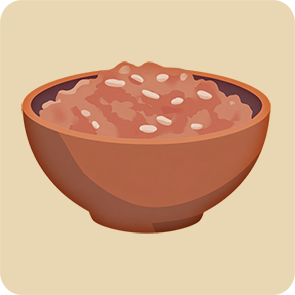
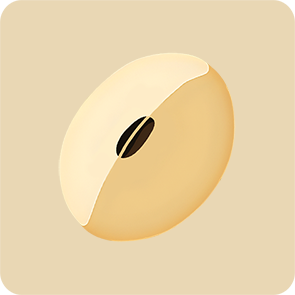
Navy Bean
Kidney Bean

Fava Bean
Fava beans have a buttery texture and slightly nutty flavor, making them a versatile ingredient in many cuisines. They support muscle health, digestive function, and provide lasting energy.
185
1 cup, cooked
(170 grams)
CAL
A
Nutri-Score
High in plant-based protein, rich in fiber, and naturally low in fat.
Value per 100 grams & per cup (170g):
110 kcal | 185 kcal
Protein
7.5 grams | 13 grams
Fats
0.5 grams | 1 gram
Carbohydrates
20 grams | 32 grams
Fiber
5.5 grams | 10 grams
Vitamins & Nutrients
- Folate (Vitamin B9): Supports DNA synthesis and cell growth.
- Iron: Important for oxygen transport and energy.
- Magnesium: Helps maintain nerve and muscle function.
- Vitamin A: Supports vision and immune health.
Satiety and Feelings
Fava beans provide a creamy, satisfying bite with a balance of protein and fiber that promotes fullness and steady energy.
What does 100 g look like?
About 1/2 cup cooked fava beans, or roughly 4 heaping tablespoons.
What does 2000|2500 calories look like?
About 11 cups cooked fava beans — roughly 1.9 kilograms (4.2 lbs) or 20 medium servings.
Daily Value per 100 grams %
Did you know?
Fava beans are one of the earliest cultivated crops, dating back over 6,000 years.
They contain L-dopa, a compound used in Parkinson’s disease treatment.
Fava beans are commonly used in Mediterranean and Middle Eastern cuisines.
They are an excellent source of plant-based protein and fiber.
Their high fiber content helps improve digestive health and blood sugar regulation.
Drawbacks ⚠️
Can cause favism, a rare genetic condition causing hemolytic anemia in some people (especially those with G6PD deficiency).
May cause gas or bloating due to fiber and oligosaccharides.
Contain antinutrients like phytates, which reduce mineral absorption if not cooked properly.