India Pale Ale

Rosemary

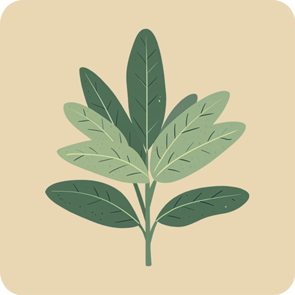
Sage
A fragrant, earthy herb, sage is often used fresh or dried to season meats, soups, and sauces, adding a warm, savory depth to dishes.
3
medium sprig
(1 grams)
CAL
A
Nutri-Score
Contains antioxidants, vitamins, and minerals; high in fiber if dried.
Value per 100 grams & per ¼ cup (5g):
315 kcal | 16 kcal
Protein
10 grams | 0.5 grams
Fats
7 grams | 0.35 grams
Carbohydrates
63 grams | 3 grams
Fiber
40 grams | 2 grams
Vitamins & Nutrients
- Vitamin C: Supports immune system function.
- Vitamin A: Supports vision and skin health.
- Calcium: Supports bone strength.
- Magnesium: Important for muscle and nerve function.
Satiety and Feelings
Sage is very low in calories per serving but high in fiber (dried), which can aid in digestion and contribute to a sense of fullness when used generously.
What does 100 g look like?
About 3 ½ cups of loosely packed sage leaves.
What does 2000/2500 calories look like?
Roughly 6 ½ cups dried sage (950 grams / 2.1 lbs.)
Daily Value per 10 grams %
Did you know?
Sage has been used since ancient times for culinary and medicinal purposes.
Varieties include common sage, purple sage, pineapple sage, and clary sage, each with distinct flavors.
Its name comes from the Latin word salvia, meaning “to heal.”
Contains compounds like rosmarinic acid and cineole with antioxidant and antimicrobial properties.
Drawback
Very strong flavor, which can dominate dishes if overused.
High in fiber in large quantities may cause digestive discomfort.
Contains essential oils that may be irritating in excess.