Sage

Chives
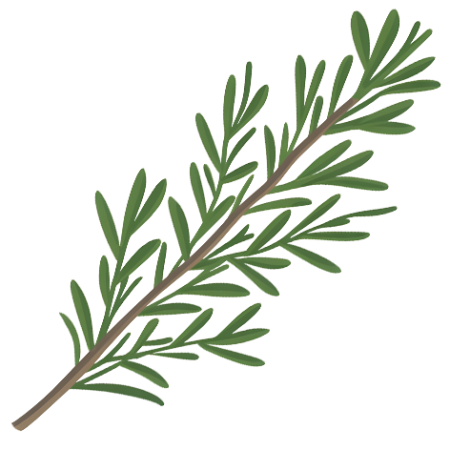
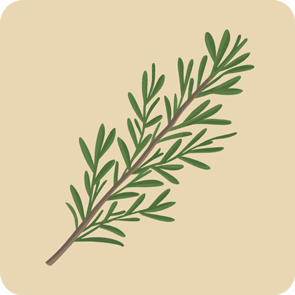
Rosemary
A fragrant, piney herb, rosemary is often used to season roasted meats, vegetables, and breads, lending a robust, savory aroma to dishes and has been traditionally valued for its medicinal properties.
1
medium sprig
(3 grams)
CAL
A
Nutri-Score
Contains antioxidants and vitamins, but high in oxalates if consumed in large amounts.
Value per 100 grams & per ¼ cup (3 g):
130 kcal | 4 kcal
Protein
3 grams | 0.1 grams
Fats
5 grams | 0.15 grams
Carbohydrates
20 grams | 0.6 grams
Fiber
14 grams | 0.4 grams
Vitamins & Nutrients
- Vitamin K: Important for blood clotting and bone health.
- Iron: Helps with oxygen transport in the blood.
- Calcium: Strengthens bones and teeth.
- Manganese: Supports metabolism and antioxidant defenses.
Satiety and Feelings
Rosemary is aromatic and low in calories, providing flavor with minimal impact on fullness.
What does 100 g look like?
About 10 tablespoons of dried rosemary or a small bunch of fresh rosemary sprigs.
What does 2000/2500 calories look like?
About 15 cups of dried rosemary (1500 grams / 3.3 lbs.)
Daily Value per 100 grams %
Did you know?
Rosemary (Rosmarinus officinalis) is native to the Mediterranean region and has been used for thousands of years.
Ancient Egyptians used rosemary in burial rituals and to honor the dead.
In ancient Greece and Rome, students would wear rosemary wreaths to improve memory and concentration.
Rosemary oil has been traditionally used for digestive issues, headaches, and circulation improvement.
There are several varieties of rosemary, including Tuscan Blue, Arp, Prostratus, Salem, and Barbecue, each with unique aromas, growth habits, and culinary or ornamental uses.
Rosemary contains compounds that may improve memory and cognitive function.
The essential oils in rosemary have antimicrobial properties, which can help preserve food naturally.
Drawback
High in oxalates, which may affect kidney health if eaten in large quantities.
May interact with blood-thinning medications in concentrated forms.